- Mumbai, New Delhi, Bangalore
- (+91) 81518 30000
- WhatsApp Now
- contact@vedawellnessworld.com

Mental health has always been a complex field. Unlike a broken bone that shows up on an X-ray or a sugar level that can be checked with a blood test, diagnosing mental health conditions has never been straightforward. It has traditionally relied on long conversations, observations, and sometimes trial and error. But in recent years, technology has revolutionized how we identify, understand, and diagnose mental health issues.
From mobile apps to artificial intelligence (AI), new tools are helping doctors spot problems earlier and giving patients hope for faster, more accurate treatment. But like all advancements, these come with benefits, limitations, and myths that need clarification.
Old Times:
In earlier decades, diagnosing mental health issues was mostly based on:
This meant diagnosis was slow, often missed, and sometimes inaccurate.
Current Times:
Today, technology complements traditional methods by providing data-driven insights. We now have:
This shift has made diagnosis faster, more objective, and more accessible.
1. Screening Apps: Patients answer guided questions via apps that flag early signs of depression, anxiety, or addiction.
2. Wearables: Devices like smartwatches track sleep patterns, heart rate variability, and stress signals.
3. AI-Powered analysis: Algorithms study voice tone, text messages, or facial cues to detect subtle signs of mental distress.
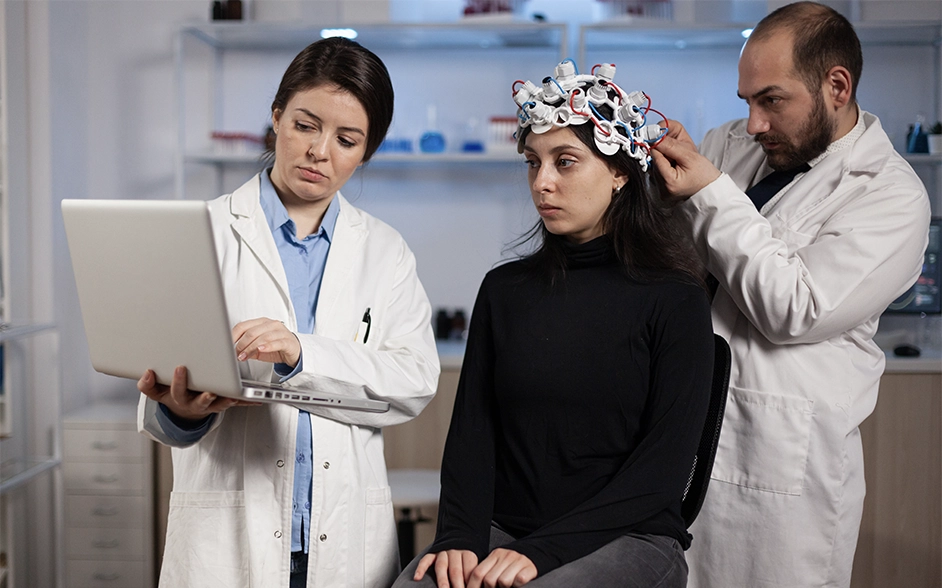
4. Neuroimaging & EEG: Scans provide biological evidence of disorders like schizophrenia, PTSD, or Alzheimer’s-related mental decline.
5. Telepsychiatry: Video consultations combined with data from apps and wearables help doctors diagnose remotely.
This blend of self-reported data and objective digital tracking provides a clearer picture for doctors.
1. Early detection: Technology identifies symptoms long before they become severe. For example, irregular sleep and language patterns can hint at depression.
2. Accessibility: People in rural or remote areas can now connect with specialists online.
3. Reduced stigma: Online tools give privacy to those hesitant to walk into a clinic.
4. Objective data: Wearables provide physical evidence that supports patients’ feelings, making diagnosis more accurate.
5. Better monitoring: Doctors can track progress in real-time rather than waiting months for a follow-up.
1. Not 100% accurate: Apps may flag false positives or miss subtle conditions.
2. Privacy concerns: Sensitive data like mood logs or voice recordings can be misused if not protected.
3. Over-Reliance: Technology should complement, not replace, human doctors.
4. Access gaps: Poor internet connectivity or lack of devices can limit use in low-income populations.
5. Still not comprehensive: Complex conditions like borderline personality disorder often need deep human assessment that technology alone cannot provide.
The future of diagnosing mental health looks promising with:
As these evolve, diagnosis will become even more precise, personalized, and preventive.
They can indicate risk and suggest seeking professional help, but final diagnosis should come from a doctor.
Yes, most are safe, but choose trusted brands that protect your data.
Yes, technology can make mistakes. That’s why it must be combined with human expertise.
It provides faster results, real-time data, and breaks barriers of location and stigma.
Unlikely. Mental health involves empathy, context, and personal judgment, qualities no machine can replicate.