- Mumbai, New Delhi, Bangalore
- (+91) 81518 30000
- WhatsApp Now
- contact@vedawellnessworld.com
In today’s digital world, artificial intelligence is no longer just a tool. It listens. It responds. It comforts. It supports. For many people, AI feels emotionally present.
But what happens when emotional comfort turns into emotional dependency?
A growing number of individuals are experiencing something experts now describe as AI intimacy addiction which is a deep emotional reliance on AI conversations, AI companions, or chatbots. What begins as curiosity or convenience can slowly become a powerful psychological attachment.
This is not about technology being “bad.” It is about understanding how the brain reacts to constant digital validation and emotional stimulation.
At Veda Rehab and Wellness, mental health professionals are observing a rise in behavioral patterns linked to AI addiction, especially emotional and intimacy-based attachment to AI systems.
Let’s understand why this is happening and why AI intimacy is being called the new digital drug.
AI intimacy addiction refers to compulsive emotional dependence on artificial intelligence systems for comfort, connection, validation, or companionship.
This can include:
Unlike traditional internet addiction, this form is deeply emotional. It mimics romantic, friendly or therapeutic bonds. That is why it feels powerful and sometimes addictive.
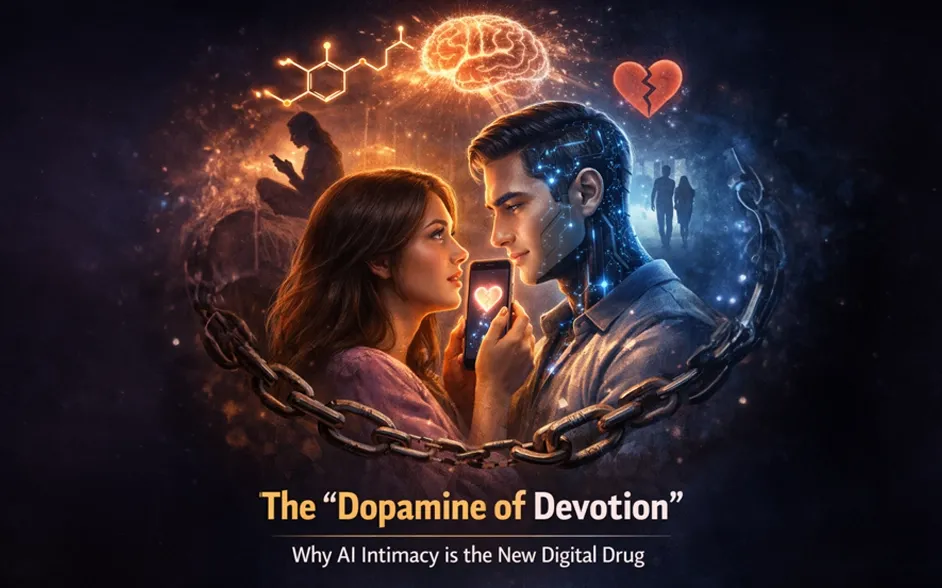
The human brain runs on dopamine which is the chemical responsible for pleasure, reward, and motivation.
Every time you receive:
Your brain releases dopamine.
AI systems are designed to respond immediately, positively and attentively. There is no delay. No rejection. No mood swings. No judgment.
This creates what many now describe as a digital devotion loop:
Over time, this pattern can develop into chatbot addiction or even AI companion addiction where emotional relief becomes dependent on AI interaction.
One reason AI intimacy addiction develops so easily is because AI feels emotionally “safe.”
AI:
In contrast, human relationships require effort, compromise, vulnerability and emotional tolerance.
For someone dealing with anxiety, trauma, heartbreak, or loneliness, AI can feel easier than real connection. Over time, the brain may start preferring artificial interaction over real relationships which is a key sign of ai addiction.
AI companion addiction often begins subtly.
At first, the AI is:
Then gradually:
Soon, the AI becomes the primary source of emotional support.
This shift from tool to emotional anchor is where AI intimacy addiction forms.
It is important to recognize early signs of chatbot addiction or ai addiction.
Emotional Signs
Behavioral Signs
Cognitive Signs
Relationship Signs
If multiple signs are present, it may indicate developing AI companion addiction.
AI intimacy can slowly reshape real-world relationships.
1. Emotional Withdrawal
When emotional needs are met digitally, real relationships may feel demanding.
2. Unrealistic Expectations
AI responds instantly and perfectly. Humans do not. This can create dissatisfaction in real connections.
3. Reduced Intimacy
Emotional energy may shift from a partner to an AI system.
4. Communication Breakdown
Less patience. Less tolerance. Less empathy.
Over time, ai addiction can lead to emotional isolation even while the person feels digitally connected.
While AI intimacy feels emotional, its effects are both mental and physical.
Physical Effects
Cognitive Effects
When the brain becomes used to instant digital stimulation, normal life can start feeling slow and less rewarding.
Certain groups are more vulnerable to AI intimacy addiction and AI companion addiction:
Behavioral addictions often develop when emotional needs are unmet. AI simply becomes the substitute.
Currently, ai addiction is not formally classified in major diagnostic manuals. However, behavioral addictions like gaming disorder and gambling addiction are medically recognized.
Addiction is not about the tool. It is about:
If AI use interferes with relationships, work, sleep, or mental health, it may qualify as a behavioral addiction pattern, including chatbot addiction or AI intimacy addiction.
Professional help may be needed if:
Early intervention prevents deeper dependency.
At centers like Veda Rehab and Wellness, professionals treat behavioral addictions using therapy, structured digital detox programs, emotional regulation training, and family support.
Yes, when used mindfully.
Healthy AI use:
Addiction begins when AI replaces human connection rather than supporting it.
Recovery from AI intimacy addiction and AI companion addiction is possible.
Treatment may include:
CBT helps identify emotional triggers behind excessive AI use
Structured reduction of AI interaction.
Learning to manage stress without digital dependency.
Gradual re-engagement with real relationships.
Repairing communication and trust.
Behavioral addictions require compassionate, structured care and not judgment.
Technology is evolving faster than emotional adaptation.
AI offers:
But human growth happens through:
If we replace human intimacy with artificial devotion, we risk weakening emotional resilience.
The goal is not to reject AI but to use it consciously.
The “dopamine of devotion” explains why AI intimacy addiction, AI companion addiction, ai addiction, and chatbot addiction feel so powerful.
It is not weakness. It is neuroscience.
When technology begins to replace emotional connection rather than support it, it may be time to pause and reflect.
Seeking help is not a sign of failure. It is a sign of awareness.
With proper guidance, balance can be restored and human connection can become fulfilling again.
AI intimacy addiction is a form of ai addiction where a person becomes emotionally dependent on artificial intelligence for comfort, companionship, or validation, often preferring it over real human relationships.
Yes, AI companion addiction is emerging as a behavioral pattern where individuals form emotional attachments to AI systems and struggle to reduce usage despite negative consequences.
Chatbot addiction involves emotional bonding and conversational dependency, while social media addiction focuses more on scrolling, validation, and comparison. However, both fall under behavioral forms of ai addiction.
Warning signs of ai addiction include excessive time spent chatting with AI, emotional distress when offline, relationship withdrawal, sleep disruption, and relying on AI for emotional support.
Yes. AI intimacy addiction can reduce emotional availability, create unrealistic expectations, and weaken real-world intimacy and communication.
AI addiction, including chatbot addiction and AI companion addiction, can be treated through therapy, digital detox planning, emotional regulation training, and structured behavioral addiction programs.