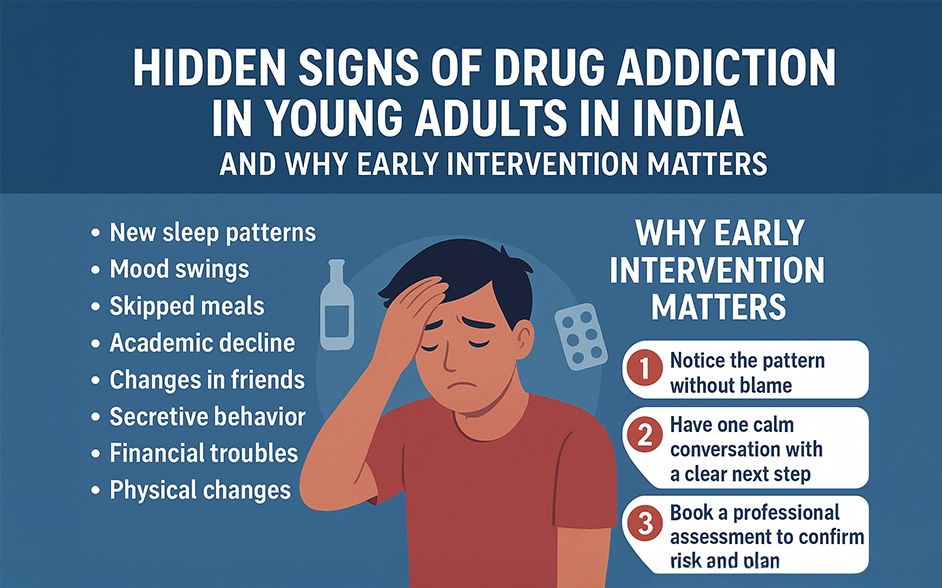
Hidden Signs of Drug Addiction in Young Adults in India and Why Early Intervention Matters

  • Home
  • Drug Addiction
  • Hidden Signs of Drug Addiction in Young Adults in India and Why Early Intervention Matters

If you are a parent or a sibling and something feels off, trust that feeling. Most families do not miss the obvious. They miss the quiet shifts that happen weeks before there is a crisis. This guide explains the signs of drug addiction in young adults, how to read early patterns, and what to do now so you do not reach an emergency later. It keeps the language simple and the steps practical.

You will also see how early assessment and steady routines at home can make professional care smoother, and when it is time to bring in specialist help. Throughout, we gently highlight the reality of drug abuse in Indian youth without panic and without shame.

Why Early Intervention Matters

Addiction grows in silence. The nervous system changes first. Sleep goes crooked. Meals get skipped. Mood swings get sharper. Grades wobble. Friend groups flip. These are the early warning signs of substance use disorder. When families act at this stage, recovery is faster and safer. Waiting for a dramatic event makes everything harder.

Early help looks like three things

  1. Notice the pattern without blame
  2.  Have one calm conversation with a clear next step
  3. Book a professional assessment to confirm risk and plan

That is the essence of early intervention for addiction recovery.

Hidden Signs to Watch for at Home and Outside

Not every sign will appear. You are looking for clusters that repeat across days.

Body and energy

  • New sleep pattern, up late and groggy mornings
  • Red or heavy eyes often blamed on screens
  • Frequent headaches or stomach upsets
  • Sudden weight change, either direction
  • Small burns on clothes or fingers, unexplained cuts

Mood and thinking

  • Irritable or unusually quiet
  • Quick to anger when asked simple things
  • Restless and unhappy at home, but oddly flat with friends
  • Anxiety that was not present before, or new panic feelings

Routines and responsibilities

  • College or coaching attendance drops, excuses multiply
  • Hobbies vanish and are replaced by hours of nothing
  • Missed deadlines, secretive all-nighters that produce little work

Money and digital clues

  • UPI or wallet transactions at odd hours and small repeated amounts
  • Frequent cab rides at night within short distances
  • Food delivery every night but no appetite at dinner
  • Items going missing at home, borrowing money without clarity

Social changes

  • New friend circle that never comes home
  • Old school friends are suddenly “childish”
  • Private trips and GPS sharing turned off

Things you may find

  • Rolling papers, burnt foil, empty blister packs, tiny zip bags
  • Strong room sprays or incense used to mask smells
  • Hidden lighters though no one smokes openly

These are early signs of substance abuse. Alone, one sign may mean nothing. Together, they tell a story.

The India Context Parents Often Miss

This section is the heart of what parents should know about drug use in youth in our cities and college towns.

  • Availability is quiet. Cannabis, mephedrone, party pills, cough syrups and prescription sedatives can move through social circles, PGs and hostels.
  • Stress peaks are triggers. Board results, entrance exams, first job nights, breakups.
  • Screens are supply. Encrypted groups, disappearing chats, late night deliveries, ride pickups at corners rather than the gate.
  • Mixing is risky. Alcohol plus pills, or cough syrup with other sedatives, can slow breathing.
  • Polydrug use looks like mood chaos. One week wired, next week sleepy.

You do not need to know names of substances. You need to notice patterns and act.

Experimentation or Addiction How to Identify Drug Addiction

Use these four questions to tell pattern from phase

1. Frequency

Is use happening weekly or more

2. Function

Do studies, work, or relationships keep breaking because of it

3. Control

Have they clearly tried to cut down and could not

4. Consequences

Are there repeated problems and yet use continues

If three answers lean yes, you are likely seeing an early substance use disorder. This is how clinicians how to identify drug addiction in simple terms.

What to Do This Week-A Calm Seven-Day Plan

Day 1

Write down what you have noticed and why you are worried. Facts only. Sleep, money, grades, mood.

Day 2

Have one quiet talk at a safe time. Use this script

“I care about you. I am worried about your sleep, missed classes, and late night spends. I am not here to fight. I am asking for one step this week a private health assessment. Will you come with me”

Day 3

Book an assessment with a psychiatrist or an addiction medicine specialist. If you can get an early consult at a centre you trust, do that.

Day 4

Reset the home setup

  • Remove alcohol at home for now
  • Lock up prescription sedatives and pain pills
  • Fix meal times and sleep timing for the whole family

Day 5

Plan one short routine together

  • 10-minutes walk after dinner
  • Phone out of the bedroom by 10 pm
  • Two litres of water daily and simple meals

Day 6

Agree on one boundary and keep it

  • “We will not discuss money at night. We will talk at 10 am daily.”
  • “If you are intoxicated, we will pause and talk in the morning.”

Day 7

Do the assessment and follow the plan you are given

This is early help before rehab is needed. It prevents drift toward a crisis.

Conversation lines that lower conflict

  • “I can see you are stressed. I want to help without shouting.”
  • “One step today beats a perfect plan tomorrow.”
  • “I will not lecture you. I will listen and then we will choose the next step together.”
  • “If the week goes badly, we will talk to the doctor on Friday.”

These lines help when you are figuring out how to spot drug addiction in young adults in India without pushing them away.

When to Seek Urgent Medical Help Now

  • Breath is slow or uneven
  • Cannot be woken or is confuse
  • Seizure or severe shaking
  • Chest pain or very high fever
  • Vomiting with blood or black stool
  • You suspect heavy mixing of alcohol and sedatives

In these cases, go to the nearest emergency department and tell the doctor exactly what you observed. Safety first.

When to Seek Urgent Medical Help Now

Small things repeated often beat big speeches.

Sleep and food

  • Lights out by a set time
  • Breakfast even if small
  • Cut caffeine after mid day

Tech hygiene

  • Phones outside the bedroom at night
  • Social apps off the home screen
  • 2-hour screen free block in the evening

Money and travel

  • Weekly allowance not daily cash
  • UPI limits for a month
  • Avoid late night cab hops for a while

Study and work rhythm

  • Short study blocks with breaks
  • A post class walk to reset
  • A weekly planning session on Sunday

Allies

  • One teacher or mentor who checks in
  • One family member who is the calm contact


These are protective factors that slow or stop the slide.

When Professional Help Is the Right Next Step

If the assessment shows moderate to high risk, do not wait for a blow up. A combined plan works best

  • Outpatient therapy and psychiatry for motivated students who can stick to routines
  • Day programmes when structure is needed without staying overnight
  • Short stabilisation stays when sleep, anxiety or withdrawal make home unsafe
  • Family sessions that teach boundaries and weekly rituals

If your family needs a private space with medical oversight and a gentle routine, Veda offers discreet assessments, a 10-day stabilisation pathway and a 1-page plan you can carry back to college or work. The focus is sleep, safety, and real routines not long lectures.

Quick Reference List of Drug Addiction Symptoms India

Use this as a fridge checklist for a month. You are watching for patterns.

  • Three or more late nights in a week
  • Sudden appetite changes and frequent nausea
  • Missed classes or shifts three times in two weeks
  • Small secret spends at night on UPI
  • New friends never met, old friends avoided
  • Smells covered with room spray or incense
  • Rolling papers, burnt foil, blisters, lighters
  • Mood swings and small lies that do not match facts

If four or more show up across two weeks, book an assessment. This is not panic. It is prevention.

Prevention Basics for Parents of Teens and College Youth

  • Talk early and often about substances and stress. Short chats beat big lectures.
  • Model the habits you want. Sleep routine, exercise, and honest talk.
  • Make your home low access. Lock medicines. Keep alcohol out of sight.
  • Keep one shared calendar for the family. Predictable routines lower risk.
  • Watch for exam stress, breakups, hostel shifts, and first job training. These are the windows where slips start.
  • Do not make shame the tool. Use boundaries and next steps.
  • Share helpline numbers and clinic contacts before there is a crisis.

This is the real work behind drug addiction symptoms India awareness campaigns. Quiet structure. Early action.

How Veda Supports Early Intervention

Families who call us are usually tired and worried but still early. That is the best time to act. Here is how a simple path works

  • Quiet consult to map risk and decide if an assessment or a short stabilisation is right
  • 72-hour quickstart if needed to reset sleep and anxiety while the medical team watches vitals
  • One page plan with daily rhythm, supports, red flags and who to call
  • Family training in short scripts and weekly rituals
  • Aftercare by phone or video so the routine holds when life gets busy again

Privacy is standard. NDAs, limited access teams, device lockers by choice, no media tours. Your story stays yours.

FAQs Related to Drug Addiction in Young Adults

My child says everyone tries it. Is this just a phase

Experimentation can happen. Addiction is different. Look for frequency, function, control, and consequences. If studies, sleep, or relationships keep breaking and they cannot cut down, it is not only a phase. Book an assessment.

A calm 5-minutes talk with one ask rarely pushes anyone away. Use caring language and one clear next step a private health assessment this week. Do not stack ten demands at once.


Keep the home calm. No late-night confrontations. Remove access to alcohol and sedatives. Agree to talk at 10 am. Book a consult the next day. Immediate shouting creates hiding. Structure creates change.

If there are safety risks like severe withdrawal, mixing alcohol with sedatives, or suicidal talk, you need medical supervision. If risk is moderate, outpatient care plus tight home routines may be enough. A short stabilisation can help when sleep and anxiety are out of control.

Confidential medical care is private. You choose who is informed. Getting help early protects grades, attendance, and health which in turn protects future options. Avoid legal trouble by addressing it now.


You do not need to have perfect words. You need one steady step. Notice the pattern. Have a calm talk. Book an assessment. Small routines at home plus professional guidance can prevent a crisis. If you need a private, doctor led plan, Veda can help you start quietly and carry a clear routine back to campus or work.

Medical disclaimer

The information shared here is for general guidance. It does not replace medical advice, diagnosis, or treatment. Please consult a qualified doctor or mental health professional for personal recommendations.

Leave A Comment

Your email address will not be published. Required fields are marked *