- Mumbai, New Delhi, Bangalore
- (+91) 81518 30000
- WhatsApp Now
- contact@vedawellnessworld.com

When a baby is born, the world expects one thing from fathers: strength.
Be supportive. Be stable. Be grateful. Be okay.
But what if you’re not?
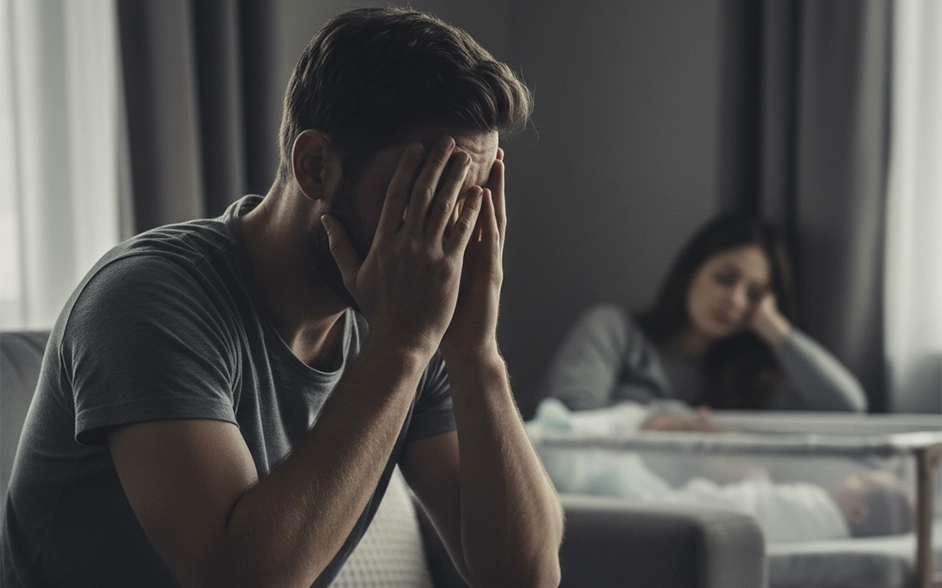
Paternal postpartum depression is real. It is common. And it is painfully misunderstood. While much attention is (rightly) given to maternal mental health, the emotional struggles of new fathers are often ignored, minimised, or brushed aside with phrases like “You’ll be fine” or “It’s just stress.”
This blog is for fathers who are quietly struggling.
And for families who love them but don’t know how to help.
Postpartum depression is not limited to mothers. Research shows that 1 in 10 fathers experience some form of depression during pregnancy or within the first year after childbirth.
That number increases when:
Postnatal mental health in dads is shaped by sudden life changes. Identity shifts. Responsibility overload. Emotional isolation. Hormonal changes. And the silent pressure to “hold it all together.”
Many fathers don’t feel “sad” in the traditional sense. Instead, they feel:
These are often signs of father depression, but because they don’t match the stereotypical image of depression, they go unnoticed.
Most fathers don’t talk about paternal postpartum depression because of shame.
Common thoughts include:
But silence doesn’t protect your family.
It slowly distances you from them.
Untreated paternal postpartum depression can affect:
1. Your Relationship with your partner
Emotional withdrawal, irritability, or shutdown can create distance at a time when connection is most needed.
2. Bonding with your child
Fathers may feel disconnected, detached, or overwhelmed, leading to guilt and avoidance.
3. Your own mental health
What starts as exhaustion can turn into chronic depression, anxiety, or substance use as a coping mechanism.
4. The emotional climate at home
Children are deeply sensitive to emotional energy. Even infants respond to stress, tension, and emotional absence.
Paternal postpartum depression is not a sign that you are weak, ungrateful, or incapable.
It is a human response to:
You are not broken.
You are overwhelmed.
Opening up can feel terrifying. But it is also the most powerful step toward healing.
Try starting with honesty, not solutions:
This is not a burden.
It’s an invitation for connection.
Choose people who can listen without fixing.
You don’t need advice. You need understanding.
Even one safe conversation can reduce emotional isolation dramatically.
Sometimes the safest place to speak is with someone trained to hold your emotions without judgement.
This is where healing often truly begins.
You should seek support if:
Early intervention prevents long-term damage.
At Veda Rehabilitation and Wellness, we understand that men experience depression differently. Fathers, especially, carry silent emotional loads shaped by responsibility, identity, and expectation.
Our approach is compassionate, private, and deeply personalised.
1. Comprehensive Mental Health Assessment
We understand your emotional state, stressors, sleep patterns, and family dynamics before planning care.
2. Individual Therapy
Focused on emotional processing, identity shifts, guilt, anxiety, and suppressed emotions related to fatherhood.
3. Psychiatric Support (If Needed)
Medication is considered carefully, only when necessary, and always explained transparently.
4. Family and Partner Involvement
Optional sessions help partners understand paternal postpartum depression and support healing without blame.
5. Holistic Healing
Yoga, meditation, mindfulness, movement, art, and sound therapy help regulate the nervous system and restore emotional balance.
Veda is a boutique, luxury mental health centre with limited capacity to ensure deep, personalised care.
Accommodation Options
What’s included
What’s Not included
Many fathers delay treatment because they feel their family needs them strong.
But strength is not silence.
Strength is choosing to heal so you can truly show up.
Your family doesn’t want perfection.
They want you present, connected, and alive inside.
Paternal postpartum depression is a form of depression that affects fathers during pregnancy or after childbirth, often within the first year.
Signs of father depression include irritability, emotional withdrawal, anxiety, guilt, sleep problems, and loss of interest or connection.
It should be. Postnatal mental health in dads is increasingly recognised as critical to family well-being, though stigma still exists.
Yes. Untreated paternal postpartum depression can impact bonding, emotional availability, and the overall emotional environment at home.
If emotional distress lasts more than two weeks or interferes with relationships, sleep, or daily functioning, professional support is strongly recommended.