- Mumbai, New Delhi, Bangalore
- (+91) 81518 30000
- WhatsApp Now
- contact@vedawellnessworld.com

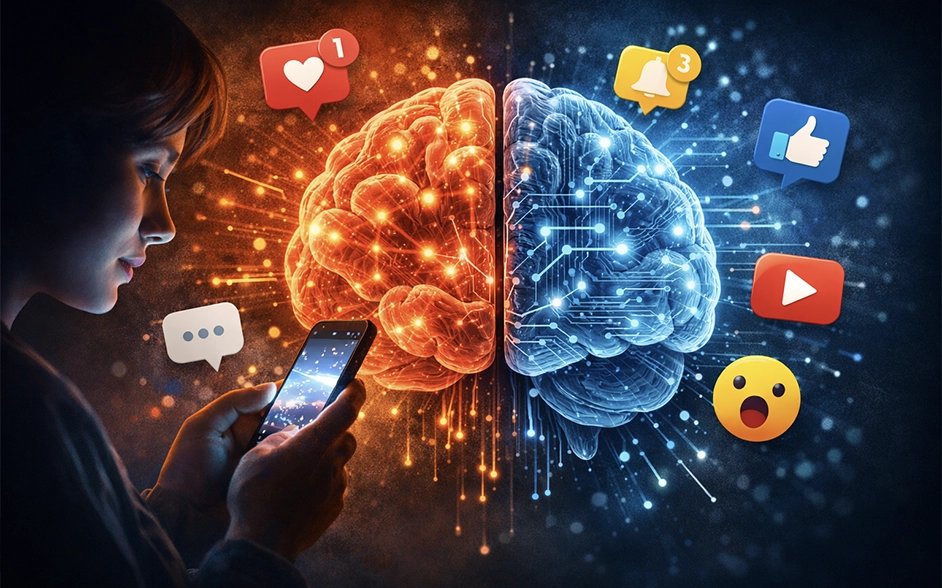
In today’s digital age, social media brain rewiring is no longer a buzzword, it’s a real phenomenon backed by science. Scroll through a feed, watch an endless loop of reels, or check notifications one more time and your brain changes. Over time, these changes can affect attention, memory, emotional wellness, sleep, and even how you connect with others.
This blog explains in simple language how social media really affects us, what scientists are finding about the cognitive effects of social media, the cognitive cost of scrolling, and practical ways to build healthier digital habits for all ages.
Our brains are built to adapt. That’s called neuroplasticity which is the ability of the brain to reshape itself based on experience.
Social media platforms are designed to trigger our reward system with little bursts of pleasure every time we see a like, comment, or new video. Over time, this leads to social media brain rewiring that resembles the way addiction works.
Studies show that using social media can:
Experts even warn that constant scrolling triggers the brain’s instant gratification circuitry, making it harder to concentrate on long tasks like studying, reading, or even meaningful conversations.
This is what we mean by the cognitive cost of scrolling where your brain learns to prefer fast, shallow content over deep, logical thinking.
Social media use is huge worldwide:
In India specifically:
The more time spent scrolling without purpose, the more likely the brain is being reshaped in ways that promote compulsive behaviour.
Here’s what happens when social media becomes more than just a habit:
1. Reduced Attention & Focus
Your brain adapts to highly stimulating content, making sustained focus harder. Tasks requiring deep thought feel draining because your brain expects quick rewards instead of patience.
2. Cognitive Fatigue
Rapid switching between different feeds and ideas leads to mental exhaustion also called cognitive fatigue which is making planning, decision-making and problem-solving more difficult.
3. Sleep Disruption
Screens before bedtime suppress melatonin production, making it hard to fall asleep and affecting memory consolidation.
4. Emotional Stress
Seeing idealised lives or heated debates can trigger anxiety, comparison, and stress. This keeps the brain in a heightened alert state rather than a calm, restorative one.
5. Memory & Learning Issues
Short bursts of scrolling train the brain for weaker working memory and less ability to retain complex information.
When social media addiction becomes chronic:
1. Attention Deficits
Over years, the brain may prioritise quick rewards over deep thinking, shrinking the capacity for focus and sustained effort.
2. Emotional Regulation Problems
Continuous emotional stimulation can impair how the brain processes stress and reward, leading to anxiety, irritability, or mood swings.
3. Reduced Memory Function
Constant scanning of short content trains the brain away from deeper memory formation.
4. Relationship Impacts
Social media can replace in-person interactions, weakening real-life social and communication skills.
5. Mental Health
Vulnerability Long-term excessive use is linked with increased risk of depression, anxiety, and stress.
Children & Teens
Younger brains are more sensitive to reward loops and comparison pressures. High usage is linked to lower academic performance, reduced attention spans, and higher anxiety.
Young Adults
Often the most active social media users who are juggling work, studies, and digital lives, young adults may feel the cognitive effects of social media most acutely, with reduced productivity and sleep problems.
Adults & Parents
Even adults suffer cognitive fatigue when social media becomes a go-to stress reliever instead of real rest. Some parents, too, report compulsive scrolling that distracts from meaningful activities.
Older Adults
While usage may be lower, older adults who use social media can still experience disrupted attention, sleep issues, and impact on daily functioning.
Platforms are engineered to keep you engaged:
This is the neurological essence of social media brain rewiring which are repeated patterns shape neural pathways.
You don’t have to quit entirely, but you can train your brain back to healthier patterns. Here are simple steps:
1. Time Limits
Use apps or phone settings to limit social media to 30–60 minutes daily.
2. Schedule Breaks
Plan fixed times for checking feeds so your day becomes intentional, not reactive.
3. Turn Off Notifications
This reduces the urge for random checking and helps cut down the urge to scroll.
4. Replace Scrolling with Activities
Reading, exercise, hobbies, or face-to-face interaction trains focus and reduces cognitive fatigue.
5. Digital Detox Days
Set aside one day per week with zero social media as it resets your reward system.
6. Mindfulness & Deep Work
Mindfulness exercises and tasks requiring focused attention strengthen your brain’s ability to think deeply again.
It’s not just about wasted time but it’s about how your brain learns to function. Constant content chunks train your mind to seek shallow stimulation instead of deep, focused thinking. That’s what we mean by the cognitive cost of scrolling.
The good news? The brain is adaptable. With consistent effort and healthier digital habits, you can reverse negative patterns and build resilience, focus, and emotional strength.
It refers to how frequent social media use changes brain pathways, prioritising instant rewards and quick content over sustained focus.
Teens may experience reduced attention span, memory challenges, and increased anxiety due to excessive social media usage.
Cognitive fatigue means the brain tires quickly, struggling with attention, decision-making, and memory after long social media use.
Yes, late-night scrolling interferes with natural sleep cycles and melatonin, leading to poorer sleep and mental fog.
Absolutely. Adults across professions can suffer reduced productivity, emotional stress, and strained relationships from excessive use.
Set daily time limits, schedule breaks, turn off notifications, try digital detox days, and focus on offline activities like reading, exercise, or hobbies.