Youth, Peer Pressure and Substance Use: Indian Insights You Should Know

  • Home
  • Addiction
  • Youth, Peer Pressure and Substance Use: Indian Insights You Should Know

If you are a parent, teacher, or older sibling, you have probably sensed it already. The conversations are different, the pressure to “fit in” is louder, and the phone is where most plans begin and end. This is why peer pressure and substance use India is not an abstract topic anymore. It is close to home. This guide explains how peer groups shape choices, what to watch for, how common this problem is becoming, and how to prevent small experiments from turning into harm. You will also find a plain checklist and five FAQs at the end.

Why Peer Pressure Matters More Than Lectures

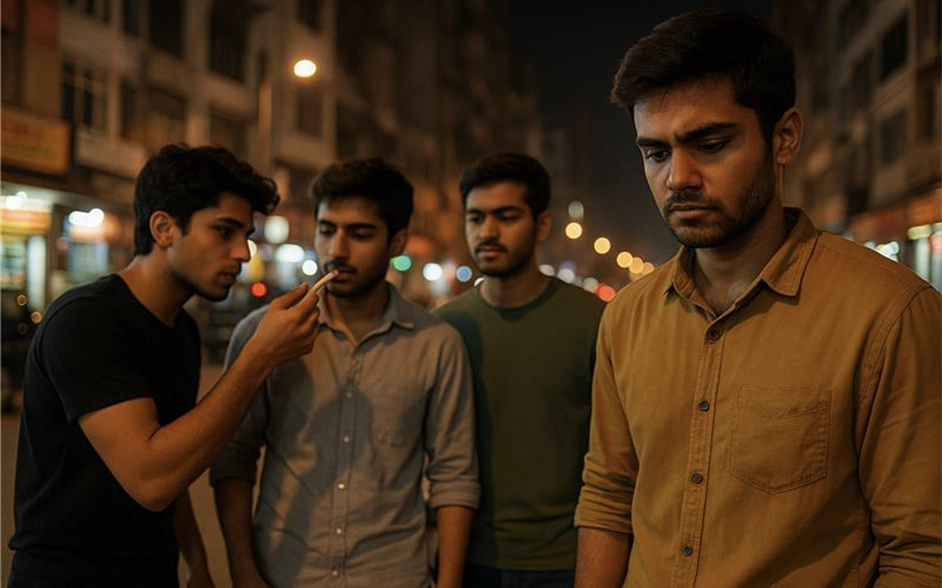
Peers do not always push with words. Most of the time, the pressure is quiet. Your child may copy what “everyone” seems to be doing, even when no one tells them to. Research on Indian youth shows that social influence strongly shapes first use and patterns of drinking or drug use in adolescence and early adulthood.

Three forces usually overlap:

1. Belonging

Teens and young adults will try something to avoid feeling left out. This can look like “just once” at a party, a study break, or a hostel birthday.

2. Curiosity and risk

The brain’s reward system is sensitive in these years. New things feel exciting, and the downsides feel far away.

3. Availability

When access is easy, trying becomes normal. In many Indian towns and cities, substances like alcohol, tobacco, cannabis and inhalants are not hard to find in youth circles. National data show, for example, that inhalants are used more often by children and adolescents than by adults, which is a worrying pattern for families.

None of this means “everybody is using.” It does mean that social influence is a real factor in social influence and drug use, and prevention has to meet teens where they are.

How Common Is Youth Substance Use In India

Different studies use different age bands and methods, so numbers vary. What is consistent is the signal: a meaningful minority of Indian adolescents are experimenting, and some are moving into regular use.

  • The national survey led by AIIMS reported current alcohol use at about 1.3 percent among ages 10 to 17, which still represents large numbers at a population level. The same body of work highlights that inhalants are a particular concern in school-age groups.

  • School and college studies in India repeatedly find that peer influence is a key risk factor for first use and continued use.

  • Global health agencies continue to warn that people between 20 and 39 carry a large share of alcohol-attributable harm, which includes many young Indians entering the workforce or higher studies.

You do not need a perfect statistic to act. If patterns at home or college match the signs below, treat it as early risk for youth substance abuse India and move quickly but calmly.

What Peer Pressure Looks Like In Real Life

Direct pressure

“Come on, just try it.” This is rare compared to the next two.

Indirect pressure

Everyone else seems relaxed with a drink, a vape, or a pill before a long study night. Your child copies the group to blend in.

Internal pressure

“I should be able to handle this.” Young people often create their own rules to prove control, and then quietly break them.

Understanding these forms helps you plan conversations that work for how peer pressure causes drug use among Indian youth.

Early Signs To Watch For At Home And In College

You are not looking for a single dramatic clue. You are looking for clusters that repeat across days or weeks.

Energy and sleep

  • Up very late and hard to wake
  • Weekend sleep patterns are extreme
  • New headaches or stomach upsets without a clear reason

Mood and attitude

  • Irritable at home, flat with old friends, suddenly overexcited with a new circle
  • Secretive about plans or defensive about simple questions

Work and studies

  • Missed classes, falling grades, last minute rushes
  • Dropped hobbies and endless scrolling

Money and digital trails

  • Small UPI spends at odd hours
  • New wallets or payment apps
  • Cleared chat histories or “disappearing message” settings with new groups

Things that do not add up

  • Rolling papers, lighters, burnt foil, empty syrup bottles
  • Strong room fresheners to cover smells
  • Long showers or late-night “walks” around the same time every day

These patterns match the substance use patterns among Indian adolescents we see in clinics and community programs.

Why Some Substances Show Up Earlier Than Others

  • Alcohol is the most socially accepted, including among college students. Studies tie early drinking to peer norms and availability at parties and PGs.
  • Inhalants are cheap, accessible, and more common in school-age groups than in adults, which is atypical and risky.
  • Nicotine and vaping are often framed as stress relief or focus aids among peers.
  • Sedatives or pain pills can appear as “study help” or “sleep help” and sometimes mix with alcohol, which is dangerous.

Families asking about alcohol use among Indian students should focus less on labels and more on patterns of sleep, mood, money, and secrecy.

A Seven-day Prevention And Response Plan For Families

This plan handles both prevention and early intervention. It fits the needs of how to prevent youth drug addiction in India at home.

Day 1: Notice without blame

Write down facts for one week. Sleep times, classes missed, new spends, and mood changes.

Day 2: One calm talk

Use a simple script.

“I care about you. Here is what I am seeing: late nights, missed classes, and new spends. I am not here to fight. I want one step this week: a private health assessment to check stress, sleep, and substances. Will you come with me”

Day 3: Home guardrails

Remove visible alcohol. Lock prescription sedatives and pain pills. Fix meal times. Keep phones outside bedrooms at night.

Day 4: Peer plan

Help your child practice one line for social pressure.

“I am off it this month. I promised my coach.”

Have a backup plan for early exits from parties and study groups.

Day 5: Healthy anchors

Daily walk, hydration, breakfast, and a 30-minute no screen block in the evening. These change the body state and lower urges.

Day 6: One boundary

Decide a boundary you can keep.

“We will not discuss money or transport after 10 p.m. We will review at 10 a.m.”

Day 7: Assessment

Do the consult with a psychiatrist or addiction clinician and follow the plan. If risk is low, continue guardrails. If risk is moderate or high, add therapy and structured routines.

This approach, paired with school and college programs, mirrors the best of substance abuse prevention programs India now rolling out in many states. Government-backed school modules like Navchetna and community peer-led initiatives are expanding to build life skills and awareness among students.

Talking To Teens In A Way That Works

  • Ask about body signals first. “How is your sleep and energy” opens doors.
  • Keep messages short and specific. “Three late nights and two missed classes” beats “You are irresponsible.”
  • Offer a single next step, not a list.
  • Praise small wins. The brain learns from success.

These habits make prevention practical for teenage drug use India contexts where arguments often make things worse.

When To Seek Urgent Medical Help

Call emergency services or go to the nearest hospital if you notice:

  • Slow or uneven breathing
  • Unresponsiveness or seizures
  • Chest pain or extremely high fever
  • Vomiting blood or black stool
  • Heavy mixing of alcohol with sedatives

Safety comes first. You can sort out the rest after everyone is stable.

What Help Looks Like At Veda

Families usually find us before a crisis, which is ideal. We focus on calm steps.

1. Quiet consult

A private conversation to map sleep, stress, substances, and risk. Clear guidance on whether home routines plus outpatient therapy are enough or whether a short stabilisation is wiser.

2. Seventy-two hour quickstart if needed

Monitoring, gentle therapy, nutrition, and sleep reset. No drama. Just structure.

3. Therapy that sticks

Motivational interviewing to build readiness, CBT & DBT tools for triggers, family sessions to set boundaries and weekly rituals.

4. Aftercare

A one page plan for home and college, with early warning signs and who to call. Tele sessions as needed.

We work inside a privacy system. NDAs at admission, limited access clinical teams, and no media access. You choose how and when family is involved.

What Schools And Colleges Are Doing

There is growing attention to prevention and early support on campus. National education bodies have added life skills and drug education modules, and several universities and state authorities have begun targeted campaigns, peer programs, and teacher training to reduce risk and guide students to help early.

You can support this at home by asking for program details and aligning family routines with school guidance.

Simple Checklist To Keep On Your Fridge

  • Sleep and meals at predictable times
  • One tech free block every evening
  • Weekly allowance rather than daily cash
  • One adult ally at school or college
  • A short practice line to refuse politely
  • Shared calendar for exams, deadlines, and breaks
  • Numbers to call in an emergency
  • A plan for who updates whom in the family

Small structures used daily beat big lectures used once.

FAQs

Is this just a phase or a real problem

Look at four things: frequency, function, control, and consequences. If use is frequent, life keeps getting disrupted, attempts to cut down fail, and problems continue, it is more than a phase. Time for an assessment.

Keep it short and calm. One observation, one feeling, one request.

“I noticed three late nights and missed labs. I am worried. Can we do a private consult this week”

Do not stack demands. Do not argue when anyone is intoxicated.

For inhalants, look for chemical smells on clothes, paint or glue residues, headaches, and irritated eyes. For sedatives or pain pills, watch for unusual drowsiness, slurred speech, and mixing with alcohol. If you see these, lock medicines and get a medical review. National data flag inhalants as a special risk in school-age groups.

Look for life skills-based school modules, peer-led community initiatives, and clinician-led family programs. Government backed efforts like Navchetna and peer interventions under the social justice ministry are designed to prevent and reduce harm. Pair them with clear home routines.

Choose structured care when there are safety risks, heavy mixing of substances, severe sleep or anxiety problems, or repeated failures to cut down despite support. A short, quiet stabilisation can reset sleep and reduce panic, after which outpatient therapy works better.

Leave A Comment

Your email address will not be published. Required fields are marked *