Link Between Gambling Addiction and Substance Abuse

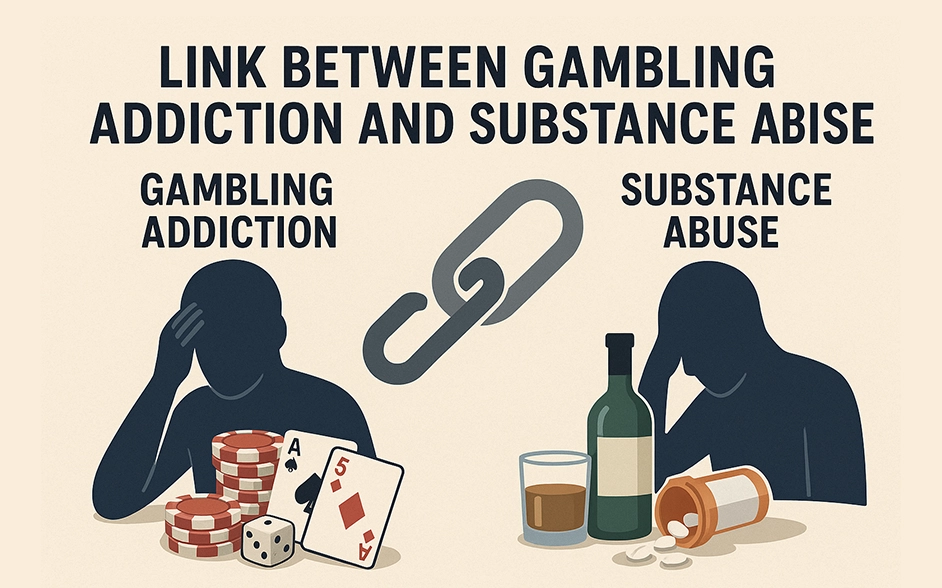
When most people think of addiction, they imagine alcohol, drugs, or smoking. Gambling, on the other hand, often slips under the radar, considered a “bad habit” rather than a serious disorder. But research and clinical experience show something surprising: gambling addiction and substance abuse are often deeply connected. Many individuals struggling with compulsive gambling also battles alcohol or drug use, and vice versa.

Understanding this link is not just important for treatment, it also changes how we view those caught in these cycles. It helps us replace judgment with compassion.

Why Gambling and Substance Use Go Hand in Hand

At first glance, gambling and substance abuse may seem very different. One involves behaviour, the other involves chemicals. But at a brain level, they share common ground.

Both target the brain’s reward system, releasing dopamine and creating feelings of pleasure and excitement. Over time, both hijack this system, leaving the individual chasing highs that are harder and harder to reach.

For many, alcohol or drugs become a way to enhance the gambling experience, to celebrate a win or numb the pain of losses. For others, gambling fills the restless space created by substance cravings. The overlap is strong enough that clinicians often call it “dual addiction.

The Psychological Link

There’s another reason the two often coexist: underlying emotional struggles. People who gamble compulsively or use substances frequently share certain psychological challenges:

  • Stress and Anxiety Relief: Both gambling and substances offer temporary escape from stress.
  • Depression: Feelings of emptiness or hopelessness make people vulnerable to both addictions.
  • Impulsivity: Difficulty managing urges contributes to risky bets and substance use.
  • Trauma Histories: Studies show many addicts, gamblers or substance users have histories of childhood trauma, neglect, or abuse.

When we recognize these roots, addiction stops looking like a moral failure. It starts looking like an attempt, albeit an unhealthy one to cope with deep emotional pain.

Statistics That May Surprise You

Research has revealed eye-opening numbers about the connection:

  • According to the National Council on Problem Gambling (NCPG), nearly 50% of people with gambling addiction also struggle with substance use disorder.
  • Studies published in the Journal of Behavioural Addictions found that alcohol is the most common co-addiction, often used to prolong gambling sessions.
  • In India, while data is limited, clinicians at rehabilitation centres report that it’s rare to see a compulsive gambler who isn’t also struggling with alcohol, cannabis, or other substances.

This isn’t coincidence, it’s a cycle where one addiction fuels the other.

How the Cycle Works

Imagine someone who has just lost heavily at a card game or betting session. The crushing guilt and stress set in. Alcohol becomes the quick solution, helping numb the pain. But drinking reduces inhibitions, often leading them straight back to risky gambling. The cycle continues: gamble, lose, drink, gamble again.

On the other side, someone dependent on alcohol or drugs may find themselves gambling more while intoxicated, chasing the same rush. Each behaviour makes the other worse, trapping the individual in a spiral that’s hard to escape.

The Health Risks Multiply

When gambling addiction and substance abuse collide, the risks don’t just add up, they multiply. ·

  • Mental Health Decline: Higher rates of depressionanxiety, and suicidal thoughts.
  • Financial Ruin: Substances already strain finances; combined with gambling losses, families often collapse under debt.
  • Relationship Breakdown: Trust is eroded on multiple levels—secrecy, lies, and broken promises.
  • Physical Health: Substance abuse weakens the body, while the stress of gambling worsens cardiovascular and sleep problems.

This combination creates what some therapists call a “perfect storm of addiction.”

Breaking the Myths

One of the biggest myths is that gambling is just a “bad habit” that can be stopped with willpower, unlike substance use. In truth, both are recognized medical conditions under the DSM-5 (Diagnostic and Statistical Manual of Mental Disorders). Both involve changes in brain chemistry and behaviour, which is why compassion, not shame is the first step toward helping.

Another myth is that treatment can target one addiction at a time. In reality, if gambling is treated without addressing alcohol use (or vice versa), relapse is far more likely.

Towards A Compassionate Approach

When we understand that gambling addiction and substance abuse are interconnected, it changes how we approach those who suffer. Instead of asking, “Why can’t they just stop?” we begin asking, “What pain are they trying to escape? What support do they need?”

Recovery requires a holistic approach:

  • Therapies like CBT (Cognitive Behavioural Therapy) to address distorted thinking patterns.
  • Mindfulness practices to manage cravings and reduce impulsivity.
  • Family therapy to rebuild broken trust and create support systems.
  • Holistic healing methods like yoga, meditation, and nutrition to restore balance.

If you or a loved one is struggling with gambling and substance use, it’s easy to feel hopeless. But countless people have broken free from this cycle. The path forward may involve rehab, therapy, and honest conversations, but recovery is real and possible.

The link between gambling addiction and substance abuse is a reminder that addicts are not weak, they are people in pain. With the right help, they can rebuild their lives, restore relationships, and find joy beyond the next bet or the next drink.

At Veda Rehabilitation and Wellness, we’ve seen individuals trapped in dual addictions emerge stronger through holistic programs that treat mind, body, and spirit together. With compassionate support, healing is not only possible, it’s within reach.

Leave A Comment

Your email address will not be published. Required fields are marked *