- Mumbai, New Delhi, Bangalore
- (+91) 81518 30000
- WhatsApp Now
- contact@vedawellnessworld.com
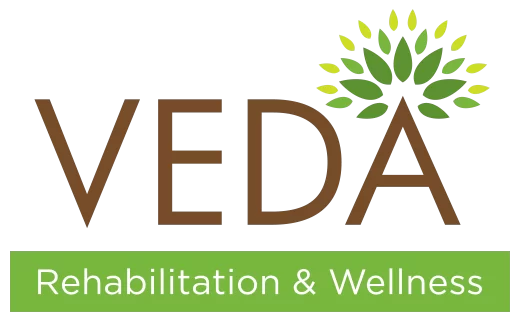
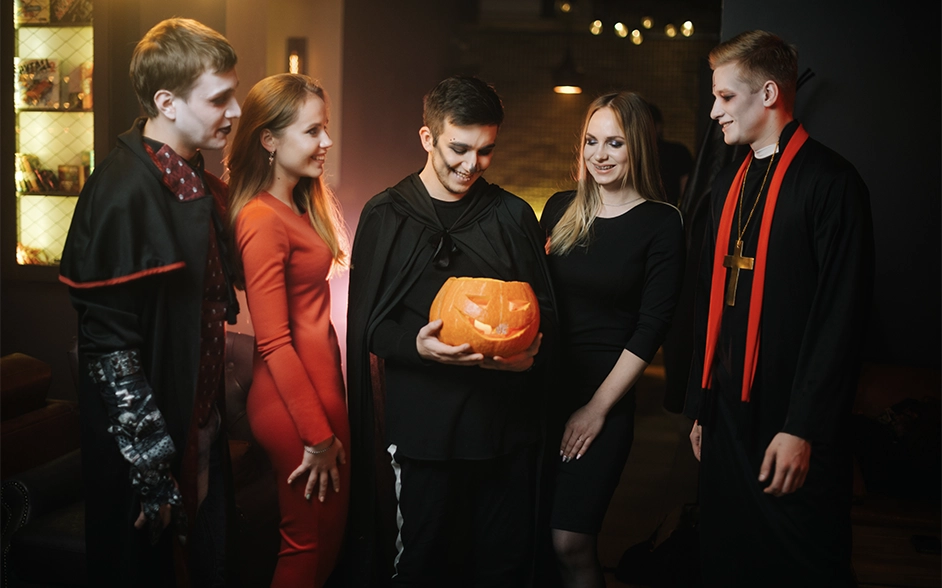
Halloween looks cheerful from the outside with pumpkins glowing, costumes everywhere, children laughing, adults planning parties and photo-ops. But if your stomach tightens as October 31st approaches, you’re not alone. Many people feel uneasy, overstimulated, or strangely low during the “fun” season and quietly wonder, “why I feel anxious at Halloween?” This is a real, common experience and there’s nothing “wrong” with you for feeling it.
This guide unpacks the hidden pressures behind Halloween anxiety, offers simple tools for spooky season mental health, and shows you how to celebrate in a way that actually feels good.
Halloween is observed every year on October 31. Its roots trace back to the Celtic festival Samhain (pronounced sow-in), which marked the end of harvest and the start of winter. People believed the barrier between the living and the spirit world thinned on this night, so they lit bonfires and wore costumes for protection. Over centuries, these customs blended with later traditions and evolved into today’s Halloween: costumes, pumpkin carving, “trick-or-treat,” community events, and themed parties.
For many, it’s playful and creative. For others, the themes of darkness, masks, and surprise scares can poke sensitive places, especially if you live with anxiety, are in recovery, or simply prefer calm to chaos. Understanding that gap is the first step toward caring for yourself kindly this season.
Horror movies, haunted houses, jump scares and your brain may know it’s pretend, but your body often reacts as if it’s real. Heart racing, shallow breathing, a jolt of stress hormones. If you already experience anxiety or post-traumatic stress, those reactions can feel amplified.
Costume contests. Crowded events. Photos for social media. If you’re socially anxious, that can feel like pressure, not pleasure like What do I wear? Will I fit in? What if I don’t enjoy it?
Flashing lights, loud music, masks, heavy makeup, crowded spaces: it’s a lot. If you’re sensitive to sensory input (or simply overtired), Halloween can tip you into overwhelm quickly.
Not everyone has a party to attend. Watching others celebrate can intensify isolation. You can be surrounded by noise yet feel invisible inside which is what we call spooky isolation.
Halloween imagery sometimes echoes past experiences like violence, darkness, helplessness stirring fear memories you didn’t expect.
If you’re working on sobriety, Halloween events often center around alcohol or other substances. Social anxiety + availability + peer pressure can be a risky mix. Awareness and advance planning matter.
If that’s you: your feelings are valid. Spooky season mental health is about balance, not forcing fun that doesn’t feel good.
1) Redefine “fun” on your terms
You don’t need a loud party to celebrate. Try a softer ritual:
Fun doesn’t have to be loud. It can be gentle, warm, and safe.
2) Set boundaries without guilt
A simple, “Thanks for inviting me but this time I’ll pass,” is enough. You’re not letting people down but you’re caring for your nervous system.
3) Avoid overstimulation where possible
If jump scares spike your stress, skip haunted attractions. Curate your space with softer lighting, calmer sounds, and familiar comforts. Let your home be a sanctuary, not a set piece.
4) Ground yourself in the present
When fear loops start, use a quick 5-sense reset:
5 things you can see • 4 you can touch • 3 you can hear • 2 you can smell • 1 you can taste.
It moves you from “What if?” to “What is.”
5) Choose connection over isolation
Text someone: “Hey, Halloween’s loud for me. Can we do tea / a walk / a call?” Let one person in. It’s amazing how much lighter things feel when we’re witnessed.
6) If you’re in recovery, plan the night
Your recovery is worth protecting.
7) Create a meaning ritual
Turning fear into reflection makes the night quietly healing.
Small kindness lands big on nights like these.
Real talk
You’re not “weird” for disliking being startled. You’re not “boring” for choosing calm. If your body says “no,” it’s sending useful data. Listening is not weakness; it’s wisdom.
Consider extra support if:
Therapy can help you map triggers, practice coping tools, and build responses that keep you steady. At Veda Rehabilitation and Wellness, we combine psychological therapy with mindfulness, yoga, nutrition, and expressive therapies to help you regain ease and keep it.
You can dress up in something joyful. You can watch uplifting films. You can reflect on how far you’ve come since last year. The magic of Halloween isn’t the jump scare; it’s learning you can face shadows and still find your light.
If the night feels heavy, swap the haunted house for a warm house. Light your candle. Make hot cocoa. Choose peace over performance. You’re not missing out as you’re opting in to what your mind and body truly need.
Because the execution like crowds, noise, fear imagery can overwhelm your senses even if you like the concept. Your nervous system reacts to stimulation, not to intentions.
No. It’s tailoring your environment to your needs. Courage isn’t white-knuckling through triggers; it’s choosing what keeps you healthy.
Arrive with a plan (time limit, sober buddy, your own drink). Stand near calmer corners. Have a polite exit line ready. Consider hosting a substance-free hang as plenty of people prefer that and will be relieved you offered.
Keep it simple and kind: “Thanks for thinking of me but this time I’m keeping it low-key.” You don’t owe an essay. Boundaries protect relationships by preventing burnout and resentment.
Step outside. Breathe slowly (4 counts in, 6 counts out). Name five things you see. Text a trusted friend. It’s okay to leave early. Your well-being outranks any costume contest.
Trade nights: one for their genre, one for yours. Or watch in the day with lights on and pause as needed. Respect goes further than persuasion.
Plan a cozy solo ritual: favorite meal, warm bath, a feel-good film. Or invite one person for a quiet evening. Community doesn’t have to be a crowd.
If anxiety lasts weeks, interrupts sleep or work, reignites trauma, or makes you rely on numbing behaviors, it’s time to reach out. Support speeds recovery and gives you practical tools for the next season.