- Mumbai, New Delhi, Bangalore
- (+91) 81518 30000
- WhatsApp Now
- contact@vedawellnessworld.com
In India, alcohol is often seen as a “controlled indulgence.”
A drink at weddings, celebrations, business dinners, or weekend gatherings. For many urban professionals, moderate drinking has quietly become a part of everyday life and something that feels normal, acceptable, even harmless.
But new research emerging from India is challenging this belief in a serious way.
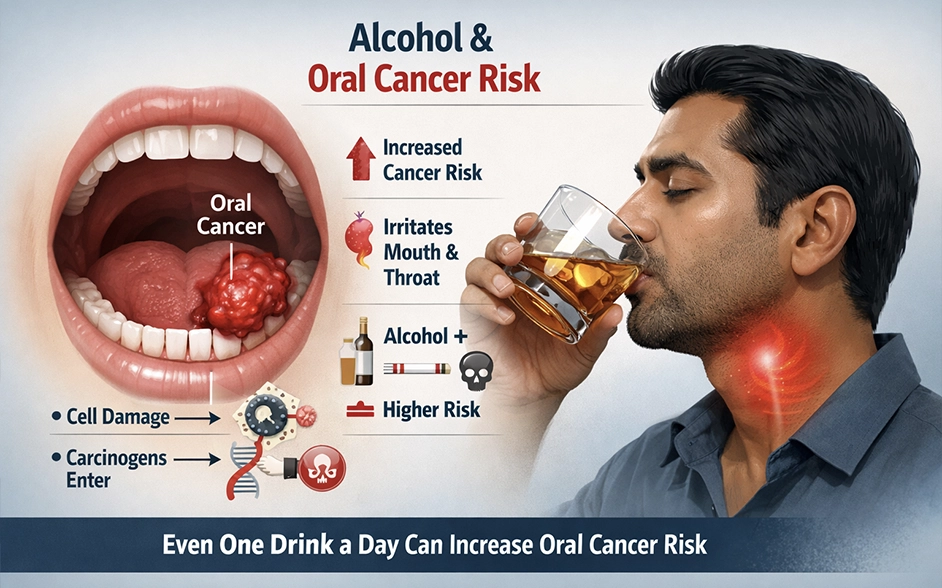
Recent studies suggest that even low levels of alcohol consumption may significantly increase the risk of oral cancer, especially in the Indian population. This has sparked an important conversation:
Is moderate drinking really safe in the long run?
This blog looks at alcohol through a clearer lens separating myths from medical reality and explains why early awareness and timely support matter more than ever.
Alcohol addiction, clinically known as Alcohol Use Disorder (AUD), is not always loud or obvious. In India, many people struggling with alcohol don’t identify as “addicted” because they:
But addiction isn’t defined by how dramatic it looks. It’s defined by loss of control, dependence, and impact on health and emotions.
Alcohol addiction may show up as:
For many, alcohol dependence grows silently until the body begins to protest.
India carries one of the highest burdens of oral cancer in the world. What’s alarming is how strongly alcohol contributes to this.
Recent Indian studies reveal that:
This makes alcohol lifestyle health risks in India far more serious than commonly assumed.
Many people believe oral cancer only happens to heavy drinkers or tobacco users. The reality is far more uncomfortable.
Myth 1: “I drink moderately, so it’s not dangerous.”
Reality: Research shows there may be no truly safe level of alcohol when it comes to oral cancer risk in India.
Myth 2: “I don’t smoke or chew tobacco, so alcohol won’t harm me.”
Reality: Alcohol alone increases oral cancer risk by damaging cells in the mouth.
Myth 3: “Alcohol helps me unwind after a stressful day.”
Reality: Alcohol worsens anxiety and sleep over time, even if it feels calming initially.
Myth 4: “I can stop anytime.”
Reality: If stopping feels harder than expected, that’s often the first warning sign.
These are not moral failures. They are biological and psychological responses and recognising them early saves lives.
Alcohol doesn’t just affect the liver. Over time, it impacts nearly every system in the body.
Often, these symptoms are treated separately without addressing alcohol as the root cause.
Many people don’t realise they are struggling because they sound so reasonable:
But over time, alcohol quietly takes more than it gives which is health, peace, relationships, and emotional stability.
It’s time to consider professional quit drinking support in India if:
Seeking help early doesn’t mean things are “bad enough.”
It means you value your future.
Effective treatment goes beyond detox. It addresses why drinking started and how to live without it.
At Veda, a trusted rehabilitation centre in Mumbai, alcohol addiction treatment focuses on:
This integrated approach supports long-term recovery, not just short-term sobriety.
Transparency matters.
At Veda:
Compared to prolonged medical treatment, hospitalisations, or cancer care, early intervention is not only healthier but often more affordable.
India offers a unique advantage when it comes to addiction recovery:
Facilities like Veda are recognised as luxury rehab centres in India, offering dignified, private, and personalised care in a stigma-free environment.
India’s oral cancer epidemic is no longer limited to heavy users.
The data is clear: even “moderate” drinking carries risk, especially over years.
Prevention begins with awareness. Healing begins with courage.
Alcohol doesn’t announce when it crosses the line from habit to harm.
It happens quietly until one day; the body speaks louder than denial.
If drinking has become something you think about often, rely on emotionally, or worry about secretly, please know this:
Help exists. Recovery is real. And reaching out early can save more than just your health.
Choosing to pause, reflect, and seek support today may be the most powerful decision you make for your future.