Credentials, Compliance & Care Standards

  • Home
  • Credentials, Compliance & Care Standards

A guide for families, physicians, and advisors evaluating Veda.

Choosing a treatment centre is a serious decision — often made under strain, and almost always on behalf of someone you love. This page exists to make that decision easier to make well. It sets out how Veda is led, how our clinicians are qualified, how we are recognised and regulated, how treatment is structured, and — most importantly — how you can independently verify what we say before anyone is admitted.

We describe our standards and our process honestly. We do not promise outcomes — we account for how we work.

Why Credentials Matter

In mental health and addiction care, quality is rarely visible from the outside. A calm setting and a reassuring brochure tell you little about whether treatment is delivered by qualified clinicians, whether the facility is properly licensed, or whether a patient’s rights and safety are genuinely protected.

Credentials are what separate care that is clinically accountable from care that is not. Registered clinicians answer to professional bodies. Licensed facilities answer to regulators. Documented processes can be reviewed. Where these are absent, families have little recourse if something goes wrong.

We encourage every family to ask hard questions — of us, and of any centre you are considering. A credible provider should welcome scrutiny and be able to show you the basis for every claim it makes. The rest of this page sets out ours, and how to check them.

Clinical Leadership & Treatment Team

Care at Veda is delivered by a multidisciplinary team, not by any single individual. Our clinicians hold recognised professional qualifications and, where applicable, are registered with the statutory or professional bodies that govern their practice. We can provide verification of any individual clinician’s qualifications and registrations to clients, families, or their advisors during the admission process, on request.

Mumbai Centre

Psychiatry

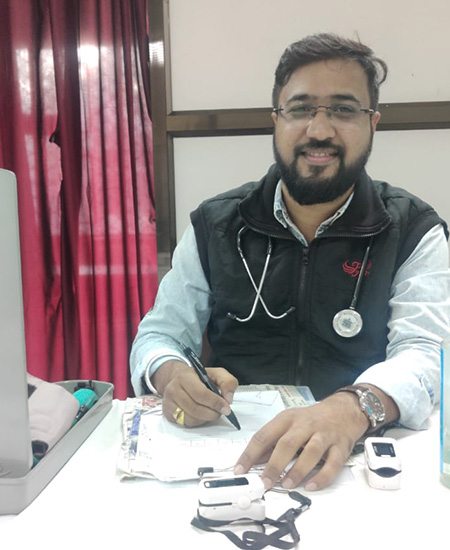
Dr. Jayesh Ghodke — Primary Psychiatrist

MBBS, DPM, DNB · 15+ years · De-addiction and broader mental-health disorders.

Dr. Vinita Pawar

Dr. Vinita Pawar — Female Forward Psychiatrist

MBBS, MD (Psychiatry), DNB Psychiatry (NBE) · 11+ years.

Psychology & Counselling

Sakshi Rai — Clinical Psychologist

MA in Clinical Psychology (Vishwakarma University) · 3 years · Addiction, rehabilitation and general mental-health counselling · Full-time.

Sarah Hatwalne — Counselling Psychologist

MA in Lifespan Counselling (St. Xavier's College, Autonomous) · 2 years · CBT, trauma and addiction counselling · Full-time.

Krupali Dhakaan — Counselling Psychologist

MA in Counselling Psychology · 2 years · Addiction, rehabilitation and general mental-health counselling · Full-time.

Medical & Allied Care

Dr. Ravi Uttam Rathod — Consultant Physician (Visiting)

7+ years · Medical officer; blood-transfusion officer.

Vaidya Anirudh Sehra — Consulting Ayurveda Physician (Consulting)

BAMS, MD (Ayurveda — Neuropsychology & Psychiatry) · 6+ years.

Nutrition, Wellness & Support

Dr. Umesh Wadhavani — Nutrition & Lifestyle - Medicine Practitioner

BHMS (India), MSc (University of Oxford, UK) · 13+ years · Lifestyle medicine; TEDx speaker.

Dhroov Narayan Mishra — Centre Administrator & Wellness Instructor

Master's in Yogic Science · 2 years · Yoga instruction; centre administration · Full-time.

Nikhil Tanaji Dhage — Client Relationship Manager

BSc (Physics) · 15 years · Client relations and family liaison · Full-time.

Sikkim Centre

Psychology & Counselling

Rinchen Doma Bhutia — Counselling Psychologist

MA in Clinical Psychology · 4 years · Addiction and recovery counselling; individual and group psychotherapy; psychoeducation · Full-time.

Adarsh Gurung — Clinical Psychologist

MA in Clinical Psychology · 3 years · Rehabilitation and relationship counselling; psychotherapy; psychoeducation · Full-time.

Medical & Nursing

Dr. Sushma Kashyap — Physician (On-call / Visiting)

MBBS, MS (Otorhinolaryngology) · Registered with the Sikkim Medical Council · 8 years.

Nitisha Tikhatri — Nurse (Visiting)

P.B.Sc Nursing · 2 years · Ward, operating theatre and emergency care.

Wellness & Therapeutic Arts

Madhav Bijlwan — Centre Administrator & Wellness Instructor

BA (Yoga); 500-hour Teacher Training Certification · Wellness and centre management · Full-time.

Maria Magdalena Malenta — Tai Chi, Qigong & Neuro-Art Instructor (Part-time / Visiting)

Certified by the Hinoki Dojo Institute of Tai Chi & Self-Healing · Movement-based wellness and neuro-art practice.

Reena Rai — Pottery Instructor (Visiting)

Diploma in Master Pottery; Diploma in Montessori Education · 17 years.

Ruben Gomes — Chef

Certified in food safety and hygiene · 35 years · Hospitality and nutrition-aligned catering · Full-time.

Registrations, Certifications & Legal Compliance

Veda operates as a licensed treatment facility and is subject to the laws and regulations that govern establishments of its kind, including the Mental Healthcare Act, 2017. Where the law requires it, our admission practices, client-rights protections, and record-keeping are designed to align with the applicable mental-health and medical regulations. Documentation of our licences and registrations can be reviewed during the admission process, on request.

Registration / Certificate Issuing Authority Applies To Status
Certificate of Incorporation
CIN: U85110MH2020PTC349888
Ministry of Corporate Affairs Mumbai Active
Mental Health Establishment Registration Maharashtra State Mental Health Authority Mumbai Active
Startup India Recognition Department for Promotion of Industry & Internal Trade (DPIIT) Mumbai, New Delhi, Bengaluru, Sikkim Active
Udyam (MSME) Registration Ministry of MSME, Govt. of India Mumbai Active
Maharashtra Shop and Establishment Certificate Finance Department, Maharashtra State Mumbai Active
Mental Health Establishment Registration Karnataka State Mental Health Authority Bangalore Active
Mental Health Establishment Registration State Mental Health Authority, Sikkim Gangtok Active

Originals and certified copies of the above are available for review by clients, families, or their advisors during admission, upon request.

Voluntary Admission & Client Rights

At Veda, how a person enters care matters as much as the care itself. Treatment works best when it is chosen, understood, and entered into with dignity. This section sets out our admission philosophy and the rights every client holds throughout their time with us.

A Voluntary Treatment Facility

Veda is a voluntary treatment facility. People come to us because they — or those close to them — have decided to seek help, and admission proceeds on the basis of the client's own informed agreement. We do not practice forced admission. Because a decision to begin treatment should never be made under pressure or without clear information, our process is built around consultation rather than persuasion: before anyone is admitted, we sit down with the prospective client and, with their agreement, their family, to discuss the situation openly and confirm that entering treatment is a considered and freely made choice.
Informed Consent & Family Consultation
Admission to Veda rests on informed consent. Before treatment begins, the client receives a clear explanation of what care at Veda involves, has the opportunity to ask questions, and gives their agreement to proceed. Consent is documented, and a client who has the capacity to make their own care decisions retains the right to ask questions and to revisit that decision during treatment.
With the client's agreement, we involve family members early — both because they often hold valuable context and because recovery is more durable when those around a client understand what treatment involves and how they can support it. Where a client prefers that certain information not be shared with family, we discuss and respect those wishes, within the limits of our clinical and legal responsibilities.

What We Explain Before Admission

Our aim is that no client or family is ever surprised by how Veda operates. Before or at the time of admission, we explain:
  • The structure of the treatment programme and our approach to care.
  • What day-to-day life at the facility looks like, and what is expected of clients during their stay.
  • The anticipated course of treatment — recognising that clinical needs can change over time.
  • The terms of admission, including financial and administrative arrangements.
  • The discharge process, including how planned discharge works and how a client may request to leave.
  • The rights a client holds while in our care.

Restrictions During Treatment

Certain points in treatment may involve temporary limits — for example, on phone use, contact with family, visitors, or movement outside the facility. Where such measures are used, they form part of a clinical plan; they are never a default rule and never a form of punishment. Whenever Veda applies a restriction of this kind:
  • It is based on a documented clinical reason connected to the client's care or safety.
  • It is time-bound and subject to review, rather than open-ended.
  • It is explained to the client in advance and, where appropriate and permitted, to the family.
  • It is recorded in the client's file, with the reason and expected duration.
Clients and families are always welcome to ask about the reasoning behind any such measure and how and when it will be reviewed.

Discharge & Early-Discharge Requests

Most clients move toward discharge through a planned process developed with their clinical team, designed to support a stable transition out of structured care. A voluntary client may also request to leave before the recommended course of treatment is complete. When this happens, the clinical team discusses the request with the client, explains any risks or considerations relevant to leaving at that stage, and works to make the transition as safe as possible. The request, the discussion, and the outcome are documented. The purpose of this process is to ensure that any decision to end treatment early is informed and recorded — not to prevent a client from exercising their choice.

Treatment Structure & Clinical Governance

Every client has an individualised treatment plan, developed after assessment and reviewed at regular intervals by the multidisciplinary team. Treatment decisions, medication, and changes to a plan are made and documented by qualified clinicians, and care is coordinated across the team through structured review. This shared, accountable model of decision-making is what we mean by clinical governance: it keeps care consistent, reviewable, and answerable.

A Structured Day

Treatment at Veda follows a planned daily rhythm that balances clinical work, rest, physical wellbeing, and reflection. The routine is itself part of treatment: it provides the stability and predictability within which recovery can take hold.

Trusted alcohol rehabilitation centre with experienced addiction specialists

7:00 – 8:00 AM

Morning beverage (tea, coffee, or detox juice) and physical activity — yoga, pickleball, or a gym workout.

Trusted alcohol rehabilitation centre with experienced addiction specialists

8:00 – 10:00 AM

Breakfast (flexible) and preparation for the day.

Trusted alcohol rehabilitation centre with experienced addiction specialists

10:30 AM

Morning prayer or gratitude practice.

Trusted alcohol rehabilitation centre with experienced addiction specialists

11:00 AM

Individual therapy session with a psychologist.

Trusted alcohol rehabilitation centre with experienced addiction specialists

12:30 PM

Therapeutic assignments — written work, psychoeducation, or reading.

Trusted alcohol rehabilitation centre with experienced addiction specialists

1:30 PM

Lunch (flexible) followed by free time (approx. two hours).

Trusted alcohol rehabilitation centre with experienced addiction specialists

3:30 PM

Creative and healing therapies — art, music, or sound healing (approx. one hour).

Trusted alcohol rehabilitation centre with experienced addiction specialists

5:00 PM

Group session or group activity (approx. one hour).

Trusted alcohol rehabilitation centre with experienced addiction specialists

6:30 PM

Evening wellness — sport, a walk, meditation, or mindfulness (1–1.5 hours).

Trusted alcohol rehabilitation centre with experienced addiction specialists

8:00 – 10:00 PM

Dinner (flexible).

Trusted alcohol rehabilitation centre with experienced addiction specialists

10:00 PM

Rest

Schedules are adapted where a client’s clinical needs require it — for example, during the early medical phase of care.

Clinical Oversight

Each client is under the care of a defined clinical team. Treatment decisions, medication, and plan changes are made and documented by qualified clinicians and coordinated through regular review.

Psychiatrist review. Each client is assessed by a psychiatrist at admission and reviewed thereafter at a defined frequency appropriate to their care, and additionally whenever clinically indicated. Medication is prescribed, reviewed, and adjusted only by the treating psychiatrist, and is documented in the client’s record.

Individual therapy. Each client is assigned a therapist and has one-to-one sessions at a defined frequency. These sessions form the core of the client’s personal therapeutic work.

Group therapy. Group sessions run throughout the week in several formats — which may include process groups, psychoeducation, and skills-based and relapse-prevention groups — facilitated by trained clinical staff.

Family Involvement

With the client's consent, families are engaged through a structured family-therapy process — typically scheduled family sessions, psychoeducation, and guided communication work. The aim is to help families understand the client's treatment, address relational factors that affect recovery, and build sustainable support for life after discharge. The extent of family involvement is guided by clinical judgement and by the client's wishes.

Medical Supervision & Detoxification

Where detoxification is clinically indicated, it is carried out under medical supervision and within the scope of the centre's medical capability. During this phase, clients are monitored according to a clinical protocol that includes regular checks of vital signs, structured withdrawal-symptom assessment, and physician oversight. Medical care continues throughout the stay as needed, with the clinical team monitoring physical health alongside psychological treatment.

Emergency Protocol & Hospital Arrangements

Client safety is supported by a defined emergency protocol. Staff are trained to recognise and respond to medical and psychiatric emergencies, with clear escalation steps and access to medical support. Where a situation requires care beyond what the facility provides, Veda follows an emergency-transfer process to move a client safely to the nearest appropriate hospital — in Mumbai, this is typically Hiranandani Hospital, Powai, or another facility judged safest and most accessible at the time.

Treatment Planning & Progress Tracking

Each individualised plan is reviewed at regular intervals by the multidisciplinary team and revised as a client progresses or as their needs change; revisions are documented. Progress is tracked through ongoing clinical notes, multidisciplinary case reviews, and any standardised assessment tools in use — a combination intended to keep treatment responsive to the individual rather than fixed to a single template.

Discharge Planning, Relapse Prevention & Aftercare

Discharge planning begins early rather than at the end of treatment. As a client progresses, the clinical team works with them — and, with consent, their family — to prepare for a stable return to daily life, including a personalised relapse-prevention plan that addresses individual triggers, warning signs, coping strategies, and support structures. After discharge, Veda offers continued support through scheduled follow-up, aftercare or alumni programming, and referral to appropriate ongoing care. Aftercare is an extension of treatment, not an afterthought; staying connected to care supports recovery, though it can never guarantee it.

Transparency on Costs

We believe families should understand the financial terms of treatment before making a decision, with no hidden charges and no surprises. Our complete payment terms — including fees, billing, and the circumstances under which refunds apply — are set out in our Payment and Refund Policy, available at vedawellnessworld.com/pricing.

Aftercare & External Coordination

Discharge from Veda is a transition, not an endpoint — the period after structured treatment is when recovery is tested in everyday life, and continuity of care matters. We describe below only the support we offer as standard.

Follow-Up After Discharge

Clients are offered structured follow-up to support a stable transition and to identify any difficulties early. Follow-up sessions may be conducted in person, online, or both — so that distance does not prevent a client from staying connected to care. Where follow-up is delivered online, it is conducted in line with the applicable telemedicine guidelines.

Family Support After Discharge

With the client's consent, support for families continues beyond discharge through follow-up sessions, guidance for supporting recovery at home, and access to family resources. Helping families sustain a supportive environment is part of how we support recovery after a client leaves.

Coordination With a Client's Wider Care Network

With the client's consent, Veda coordinates with the external professionals involved in a client's ongoing care — which may include their psychiatrist, psychologist, or family doctor — by sharing a discharge summary, communicating the treatment provided and recommendations for continuing care, and being available to the receiving clinician for handover. Any sharing of clinical information is done with the client's consent and in line with our confidentiality obligations and any disclosure duties imposed by law.

Medication Continuity

To support continuity of any prescribed medication after discharge, Veda provides a clear discharge medication summary and coordinates with the clinician who will manage medication in the community. Ongoing prescribing after discharge is managed by the client's treating clinician.

Re-Admission & Step-Down Support

Where a client would benefit from a further period of structured care or a less intensive level of support, Veda offers re-admission, a step-down programme, or referral to an appropriate level of care. Decisions about returning to or stepping down in care are made clinically, based on the individual's needs at the time.

International Client Presence

Veda has supported clients from across India and from a number of countries internationally — including the United States, the United Kingdom, Singapore, Australia, the United Arab Emirates, Kuwait, Iran, Kenya, Tanzania, and Namibia — who have chosen to seek treatment with us.

How Families Can Verify Information Before Admission

We want families to decide on the basis of confirmed facts, not impressions. You are welcome to:

  • Ask to see the qualifications and registrations of the clinicians who would be involved in care.
  • Ask to see documentation of Veda’s licences and statutory registrations.
  • Ask detailed questions about the treatment plan, daily structure, restrictions, safety and emergency arrangements, fees, and the discharge and aftercare process.
  • Involve your own doctor, psychiatrist, or legal advisor in these conversations, and have them speak with our clinical team.
  • Independently verify any recognition or affiliation we mention by checking its original source.

A Note on Sensitive Documents

Detailed documents — including clinician credentials, licences, and policies — can be shown to clients, families, doctors, or legal representatives during the admission process, where appropriate. For the protection of our clients, our staff, and the integrity of these records, sensitive documents are not posted publicly on this website, as public uploading can enable misuse, fraud, or impersonation. We are glad to make them available for review through a verified, in-person or supervised process during admission.

Veda operates as a voluntary mental-health establishment in accordance with the Mental Healthcare Act, 2017 and applicable Indian law. We describe our standards and our process. We do not promise outcomes.