CBT vs DBT Therapy: Which Therapy Is Right For You?

When you begin exploring treatment for mental health or addiction, one question often comes up; CBT vs DBT therapy and which one is better? 

Both Cognitive Behavioral Therapy (CBT) and Dialectical Behavior Therapy (DBT) are highly effective, evidence-based treatments. They help people manage difficult emotions, change unhealthy behaviors and build healthier coping skills. However, they are not the same. Understanding the difference between CBT vs DBT therapy can help you make the right choice for your recovery journey.

At Veda Rehab and Wellness, both CBT and DBT are used as part of personalized treatment programs. In many cases, combining these two therapies provides deeper and longer-lasting healing.

In this guide, we will explain CBT vs DBT therapy in simple language, how each works, who they are best suited for and why an integrated approach at Veda can make a powerful difference.

What is CBT?

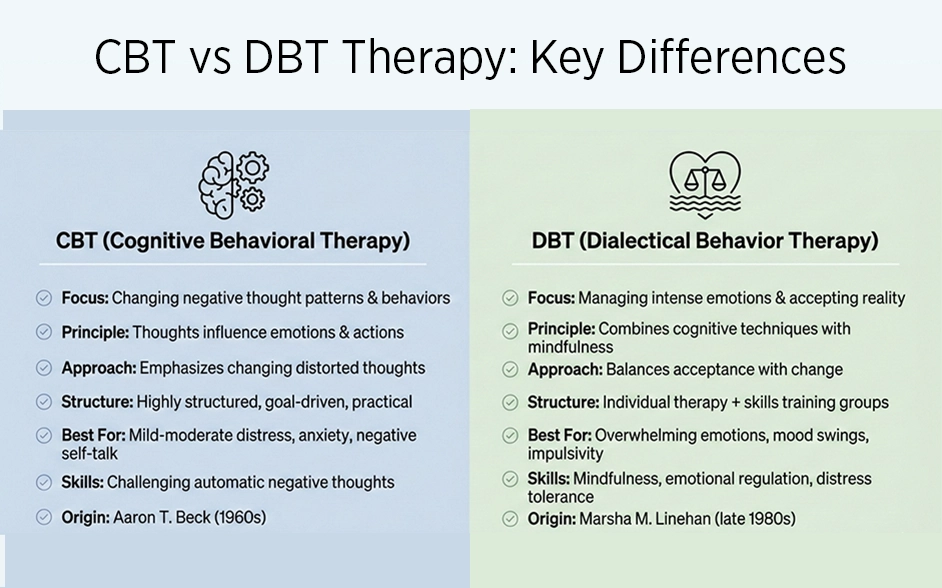
CBT stands for Cognitive Behavioral Therapy. It was developed by Aaron T. Beck in the 1960s.

CBT is based on one simple idea: Your thoughts influence your emotions, and your emotions influence your behavior.

If your thoughts are negative or distorted, they can lead to anxiety, depression, anger, or addictive behaviors. CBT helps you identify those negative thinking patterns and replace them with healthier, more realistic thoughts.

How CBT Works

CBT focuses on:

  • Identifying automatic negative thoughts
  • Challenging cognitive distortions
  • Replacing unhelpful beliefs
  • Practicing new behaviors
  • Setting measurable goals

It is structured, goal-oriented, and practical. Clients often receive homework assignments to practice new skills outside therapy sessions.

CBT is especially effective for: 

What is DBT?

DBT stands for Dialectical Behavior Therapy. It was developed by Marsha M. Linehan in the late 1980s.

DBT was originally created to treat borderline personality disorder but is now widely used for many mental health conditions.

DBT combines cognitive techniques with mindfulness and emotional regulation strategies.

How DBT Works

DBT focuses on four main skill areas:

  1. Mindfulness – Learning to stay present.
  2. Distress Tolerance – Managing crisis situations without harmful behavior.
  3. Emotional Regulation – Understanding and controlling intense emotions.
  4. Interpersonal Effectiveness – Improving communication and relationships.

While CBT focuses on changing thoughts, DBT emphasizes balancing acceptance and change.

CBT vs DBT Therapy: The Core Differences

When comparing CBT vs DBT therapy, the main differences include:

1. Focus on Thoughts vs Emotions

  • CBT primarily focuses on changing negative thinking patterns.
  • DBT focuses more on managing intense emotions and accepting reality.

2. Structure

  • CBT is highly structured and goal-driven.
  • DBT includes both individual therapy and skills training groups.

3. Emotional Intensity

  • CBT works well for mild to moderate emotional distress.
  • DBT is often used when emotions feel overwhelming or out of control.

4. Acceptance Component

  • CBT emphasizes changing distorted thoughts.
  • DBT teaches acceptance while also working toward change.

Both therapies are powerful but they serve slightly different needs.

CBT vs DBT Therapy for Addiction

In addiction recovery, both therapies play important roles.

CBT for Addiction

CBT helps individuals:

  • Identify triggers
  • Challenge thoughts like “I can’t cope without substances”
  • Develop relapse prevention plans
  • Replace harmful behaviors with healthy coping skills

DBT for Addiction

DBT helps individuals:

  • Tolerate cravings without acting on them
  • Manage emotional triggers
  • Reduce impulsive behavior
  • Build healthier relationships

At Veda Rehab and Wellness, combining CBT and DBT therapy allows clients to address both thinking patterns and emotional regulation which is a critical combination for long-term recovery.

Who Should Choose CBT?

CBT may be ideal if you:

  • Struggle with negative self-talk
  • Experience anxiety or depression
  • Prefer structured sessions
  • Like measurable goals
  • Want practical problem-solving tools

CBT is often effective for individuals who feel stuck in repetitive negative thinking.

Who Should Choose DBT?

DBT may be better if you:

  • Experience intense mood swings
  • Struggle with impulsive behavior
  • Have difficulty regulating emotions
  • Feel overwhelmed in relationships
  • Engage in self-destructive coping mechanisms

DBT is especially helpful for individuals who feel emotionally flooded and need stronger emotional coping tools.

CBT vs DBT Therapy: Why Not Both?

Many people think they must choose between CBT vs DBT therapy. However, in reality, combining both can provide deeper healing.

At Veda Rehabilitation and Wellness, therapists assess each individual carefully and design customized treatment plans. Some clients begin with DBT to stabilize intense emotions, then move into CBT to restructure long-term thinking patterns.

The Advantage of using both Therapies

  • CBT improves thinking clarity.
  • DBT strengthens emotional control.
  • Together, they address both logic and emotion.
  • They reduce relapse risk.
  • They build stronger resilience.

This integrated approach ensures that clients not only understand their patterns but also develop the emotional strength to handle life’s challenges.

Benefits of coming to Veda for CBT vs DBT Therapy

Choosing the right center matters just as much as choosing the right therapy. 

Here’s why many individuals trust Veda Rehab and Wellness: 

  1. Personalized Treatment Plans

No two individuals are the same. At Veda, therapists tailor CBT vs DBT therapy programs based on your diagnosis, emotional needs, and recovery goals. 

  1. Experienced Clinical Team

Veda’s professionals are trained in both CBT and DBT techniques, ensuring that therapy is applied effectively and ethically. 

  1. Structured Yet Supportive Environment

Recovery requires safety and stability. Veda provides a calm, confidential setting that promotes healing. 

  1. Integrated Addiction and Mental Health Care

Many people struggle with both substance use and mental health conditions. Veda addresses both simultaneously using CBT vs DBT therapy strategies. 

  1. Holistic Healing Approach

In addition to therapy, Veda incorporates: 

  • Mindfulness practices 
  • Wellness programs 
  • Lifestyle restructuring 
  • Aftercare planning 

This ensures long-term emotional balance rather than short-term symptom relief.

How to decide between CBT vs DBT Therapy

If you’re unsure, ask yourself: 

  • Do my thoughts feel distorted and negative? then CBT may help. 
  • Do my emotions feel overwhelming and uncontrollable? then DBT may help. 
  • Do I struggle with both? then a combination may be best. 

A professional assessment at Veda can provide clarity and direction. 

What to expect during treatment

When beginning CBT vs DBT therapy at Veda, you can expect: 

  • A detailed psychological assessment 
  • Goal-setting sessions 
  • Weekly individual therapy 
  • Skills-building exercises 
  • Group therapy (if appropriate) 
  • Continuous progress monitoring 

Therapy is not just about talking but it’s about building life skills that last beyond treatment. 

Long-Term Outcomes of CBT vs DBT Therapy

Research shows that both therapies: 

  • Reduce anxiety and depression 
  • Improve emotional regulation 
  • Lower relapse rates in addiction 
  • Strengthen relationships 
  • Improve overall functioning 

When delivered in a professional rehabilitation setting like Veda Rehab and Wellness, outcomes improve further due to structured care and comprehensive support.

CBT vs DBT Therapy

The question is not necessarily CBT vs DBT therapy and which one is better? 

The better question is: 

Which therapy matches your current emotional and psychological needs? 

CBT helps reshape negative thoughts. 

DBT helps manage intense emotions. 

At Veda Rehab and Wellness, using both therapies strategically allows individuals to gain clarity, emotional balance, and long-term resilience. 

If you or a loved one is considering therapy, a professional evaluation can help determine whether CBT, DBT or a combination is the right path forward.

FAQs on CBT vs DBT Therapy

1. What is the difference between CBT vs DBT therapy?

CBT focuses on changing negative thoughts and behaviors, while DBT focuses on emotional regulation, distress tolerance, and acceptance. Both are evidence-based therapies. 

CBT is typically more effective for anxiety disorders because it directly targets distorted thinking patterns. However, DBT can help if anxiety involves intense emotional reactions. 

Yes. Many treatment centers, including Veda Rehab and Wellness, use both therapies together for more comprehensive care. 

Both therapies are highly effective for addiction. CBT helps identify triggers and prevent relapse, while DBT helps manage emotional triggers and impulsive behavior. 

The duration depends on the individual’s condition. CBT can show results within 812 weeks, while DBT may take longer due to its skills-training components.

Veda Rehab and Wellness offer personalized treatment plans, experienced therapists, integrated care for addiction and mental health, and a safe, confidential healing environment. 

Leave A Comment

Your email address will not be published. Required fields are marked *