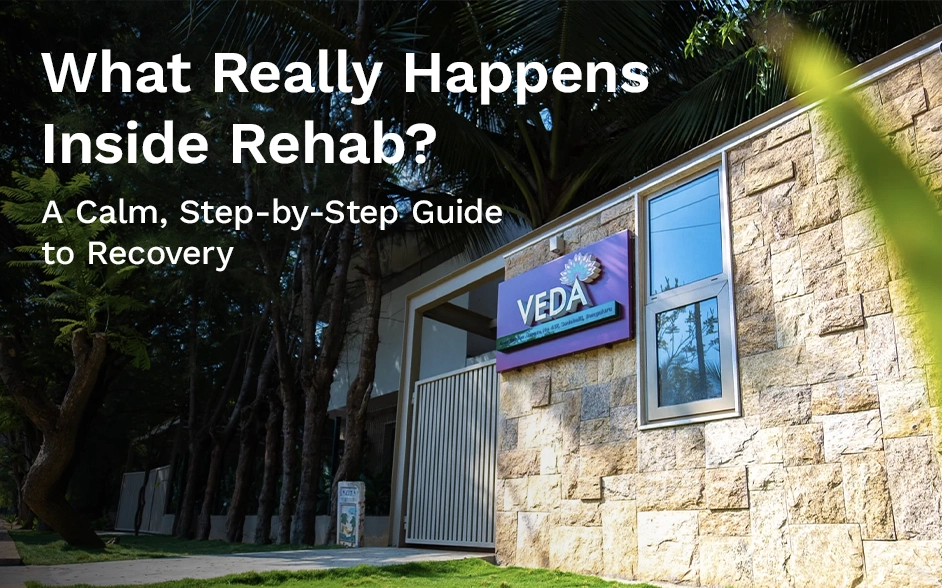
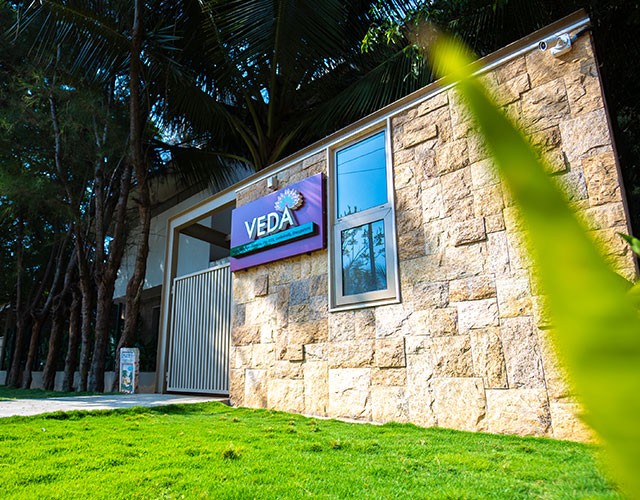
What Really Happens Inside a Rehabilitation Centre? A Calm, Honest, Step-by-Step Guide

  • Home
  • Addiction
  • What Really Happens Inside a Rehabilitation Centre? A Calm, Honest, Step-by-Step Guide

If the word ‘rehab’ makes your stomach tighten, you are not alone. 

Most people come to their first search about rehabilitation with a head full of images from TV dramas, half-remembered news stories, or fearful assumptions. The reality is almost always very different and far less frightening. 

This is a clear, honest, step-by-step guide to what actually happens inside a rehabilitation centre in India, what a daily routine in rehab looks like, and why the right programme feels less like a clinical facility and more like a structured space for genuine healing. 

Myth Check
Quick myth check: Rehab is not a prison. It is not isolation. It is not a place of shame. It is a structured, supportive environment where you are guided by professionals who want you to succeed and leave.

Step 1: Admission — Calm, Private, and Judgment-Free

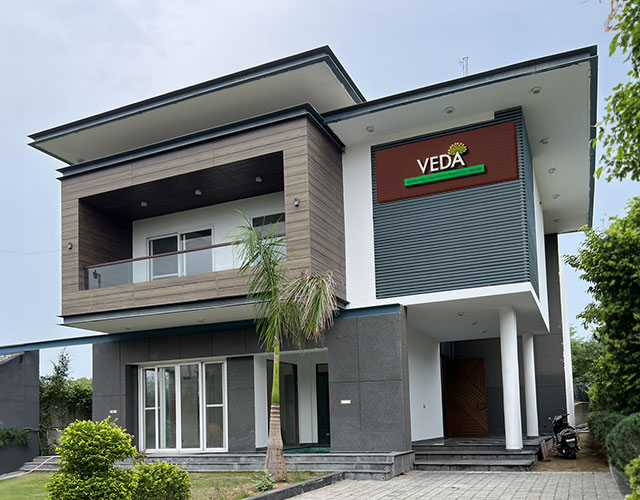
The rehab process begins at the moment of arrival. At Veda Rehabilitation and Wellness, admission is handled discreetly and with complete respect for your dignity. 

On arrival, you will have a private conversation with the clinical team covering a thorough medical assessment, mental health and psychiatric evaluation, a detailed addiction history review, and an understanding of your daily routine, lifestyle, and personal goals. This is not an interrogation; it is the foundation for building a treatment plan that is uniquely yours. No two people arrive with the same story, and no two people receive the same treatment. 

Step 2: Medical Detox — Safe, Supervised, and Supported

Not everyone needs medical detox. But for those who have been using substances heavily, detox is the essential first step and it must be medically supervised. 

At Veda, detox is conducted with 24/7 medical supervision, clinical monitoring of vital signs and withdrawal progression, medication support to manage discomfort and prevent complications, and constant emotional presence from nursing and clinical staff. 

The goal is not suffering, it is safety. Modern supervised detox is designed to be as comfortable as possible while ensuring your body stabilises safely before deeper therapeutic work begins.

Step 3: Therapy — Where Real Healing Begins

Once medically stable, the heart of recovery begins: therapy. This is where the patterns, pain, and psychological roots of addiction are explored and addressed. 

Individual Therapy

One-on-one sessions with a qualified therapist explore why substances became your coping mechanism, what emotional triggers and life stressors drive use, and how to build healthier, more sustainable ways of managing. 

Group Therapy

Group sessions create one of the most powerful healing environments in recovery, the realisation that you are not alone. Sharing experiences with others on the same journey reduces shame, builds genuine connection, and often unlocks insights that individual therapy alone does not. 

Family Counselling

Addiction affects the entire family system. Family therapy sessions repair communication, reset expectations, and help build a home environment that supports rather than undermines recovery. 

Holistic and Alternative Therapies

At Veda, the therapeutic programme extends well beyond conventional talking therapy to include art therapy, music therapy, sound healing, Reiki, and rock balancing therapy. These modalities allow people to process emotions that are often too deep or too complex for words and they consistently provide breakthroughs that traditional therapy alone does not reach. 

Step 4: The Daily Routine in Rehab — Structure That Supports Recovery

One of the most consistent findings in addiction research is this: routine is protective. Addiction thrives in chaos and unstructured time. Recovery thrives in predictable, purposeful days.  Here is what a typical daily routine in rehab looks like at Veda:  Daily Routine
Time Activity
7:00 AM Wake-up, morning tea/coffee or detox juice. A calm, gentle start.
7:30 AM Yoga, meditation, or breathing exercises. Physical activity options: gym, pickleball, or yoga.
8:00–10:00 AM Freshly cooked breakfast (flexible timing). Shower and preparation for the day.
10:30 AM Morning gratitude practice or group prayer.
11:00 AM Medical check-in, doctor consultation, or individual therapy session.
12:30 PM Therapeutic assignments – journaling, psychoeducation materials, or guided reading.
1:30 PM Lunch (flexible timing) followed by approximately 2 hours of free time.
3:30 PM Alternative therapies: art therapy, music therapy, sound healing, or Reiki (approx. 1 hour).
5:00 PM Group session or group activity (approx. 1 hour).
6:30 PM Evening wellness: gym, nature walk, pickleball, or mindfulness session.
8:00 PM Reflection time: journaling, reading, or light social interaction.
8:00–10:00 PM Dinner (flexible timing). Fresh, home-style meals prepared daily.
10:00 PM Rest time begins.

Step 5: Medical and Psychiatric Care Throughout

Rehab at Veda is not just therapy. It includes regular psychiatric evaluations, medication management where appropriate, treatment for sleep disorders and anxiety, and ongoing monitoring for dual diagnosis conditions. Doctors and therapists work together not in separate silos to ensure that medical and psychological care reinforce each other. 

Step 6: Life, Work, and Freedom — Rehab That Respects Your Reality

One of the biggest fears about entering rehab is losing control of your life. At Veda, recovery is designed to integrate with real life, not replace it: 

  • Working from rehab: If medically appropriate, remote working is supported 
  • Family visits: Regular visits are encouraged; family members can also stay on-site at an additional cost 
  • Guided outings: Shopping, cinema, nature walks, and trekking trips (when medically approved) 
  • Recreation: Pickleball, gym sessions, badminton, table tennis, board games, PlayStation, and movie nights 

These are not indulgences. They are clinical decisions because joy, connection, and a sense of normal life accelerate recovery rather than undermine it. 

Common Rehab Myths — Addressed Directly

MYTH: ‘Rehab is like a prison.’ 
TRUTH: At Veda, freedom, dignity, and personal choice are actively respected throughout the programme.

MYTH: ‘I will be completely cut off from the outside world.’ 
TRUTH: Communication with family and, where appropriate, with work is structured but not banned.

MYTH: ‘Rehab only helps with stopping substances.’ 
TRUTH: Comprehensive rehabilitation addresses mental health, emotional patterns, lifestyle, and long-term identity.

MYTH: ‘Once you go, you are stuck there.’ 
TRUTH: Treatment is planned collaboratively and reviewed regularly based on your progress and needs. 

Frequently Asked Questions

What happens on the first day of rehab?

Your first day includes a private admission process, medical and psychiatric assessment, an introduction to the facility and your clinical team, and the beginning of your personalised treatment plan. It is calm, private, and unhurried. 

Yes. Bring comfortable clothing, personal toiletries, books, and items that provide comfort. The clinical team will advise on anything that requires restriction. 

Most residential programmes last between 30 and 90 days, depending on individual medical and psychological needs. Duration is planned with you, not imposed on you. 

Comfort, dignity, and a low-stress environment are not optional extrasthey are factors that measurably improve recovery outcomes. The cost of untreated addiction in health, relationships, and productivity, far exceeds the cost of high-quality treatment. 

Leave A Comment

Your email address will not be published. Required fields are marked *