- Mumbai, Gangtok, New Delhi, Bangalore
- (+91) 81518 30000
- WhatsApp Now
- contact@vedawellnessworld.com
For many NRIs, deciding to seek help for addiction, anxiety, burnout, depression or emotional exhaustion is not easy.
Questions often begin quietly.
“Will treatment remain private?” “Will my family understand?”
“Can I recover without damaging my career or reputation?” “Is rehab in India for NRI families actually safe, professional and comfortable?”
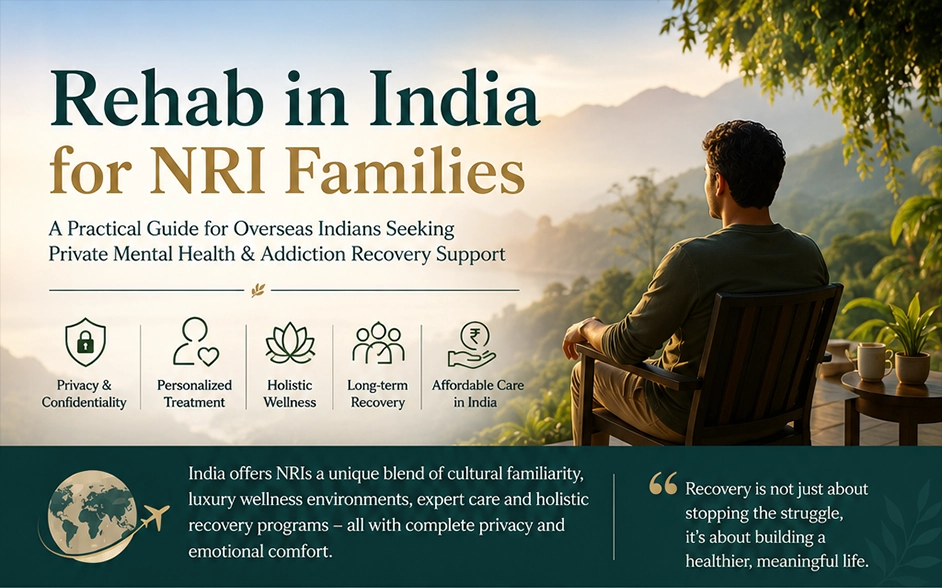
This guide is designed to answer those questions directly and help overseas Indians understand how rehabilitation and mental wellness treatment in India usually works, what to expect during the process, travel considerations, treatment options, confidentiality concerns and why many NRI families now prefer India for recovery support.
Whether someone is struggling with alcohol addiction, drug dependency, emotional burnout, anxiety or high-functioning stress, early support can make a major difference.
Over the last several years, India has become a preferred destination for luxury rehabilitation, emotional wellness programs and private mental health treatment.
Many families searching for rehab in India for NRI clients often look for a combination of:
For many overseas Indians, recovery in India also creates emotional distance from unhealthy routines, social pressure, nightlife triggers, work burnout and environments that may have contributed to emotional decline.
India’s growing wellness ecosystem now combines evidence-based psychiatry and psychotherapy with holistic recovery approaches like yoga, meditation, mindfulness, nutrition support and nervous system regulation therapies.
Many individuals who seek treatment are not always visibly struggling.
Some continue working, managing businesses, attending meetings and maintaining social lives while silently experiencing emotional distress or addiction.
Common concerns include:
Many people delay seeking help because they believe they are still “functioning normally.” Unfortunately, emotional distress often becomes harder to manage over time if left untreated.
For many NRIs, emotional comfort matters during recovery.
Being around familiar languages, food preferences, family-centered values and culturally understood emotional dynamics can sometimes make treatment feel less isolating.
This is especially important for older parents, married individuals and families deeply connected to Indian cultural expectations.
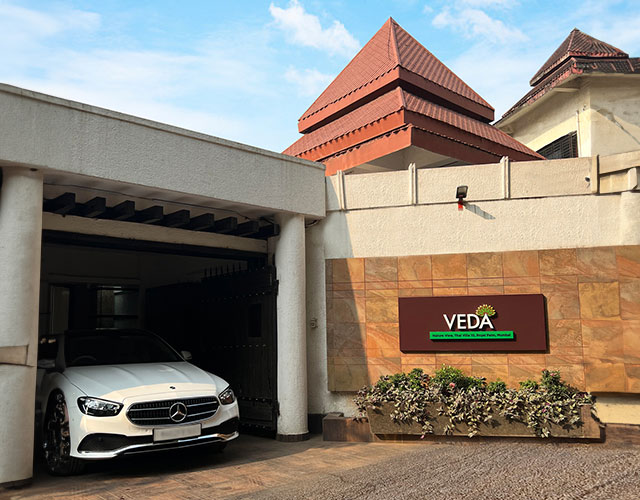
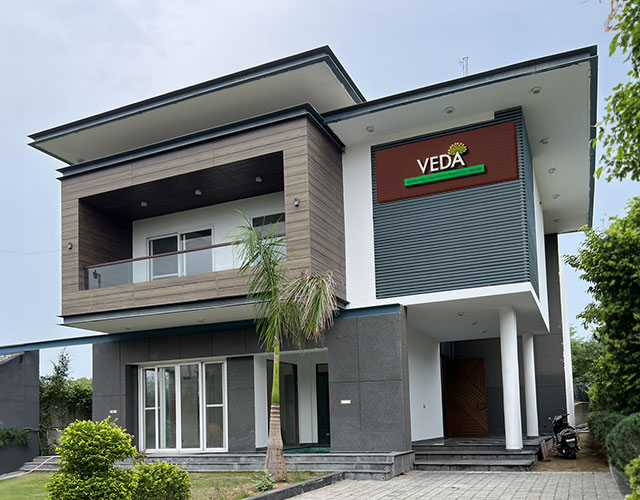
Many luxury rehab centres in India now focus heavily on creating calm, wellness-oriented spaces rather than institutional environments.
Clients often prefer settings that feel peaceful, private and emotionally safe.
Features commonly available at luxury rehab India centres include:
For many overseas Indian families, discretion is extremely important.
A large number of NRI clients specifically search for:
Confidentiality practices at private rehabilitation centres often include:
Many NRI families now prefer integrated treatment models rather than purely medication-based approaches.
Holistic recovery programs may include:
The goal is not only symptom management but long-term emotional balance and healthier coping systems.
Most private rehabilitation centres begin with a confidential assessment.
This usually includes discussions around:
In some cases, family members may also participate in early discussions if appropriate.
After travel planning is complete, clients are admitted for assessment and stabilization.
Early days often focus on:
For many individuals, the first few days are emotionally difficult. Adjustment support is therefore an important part of the process.
Treatment plans are usually personalized based on the client’s emotional, psychological and medical needs.
Programs may include:
Addiction and emotional distress rarely affect only one individual.
Families themselves often experience fear, guilt, exhaustion and emotional confusion.
Because of this, many rehab India programs now include structured family support through:
For NRI families unable to travel immediately, virtual family sessions are often arranged.
Depending on the selected city, clients may arrive through:
Mumbai
Chhatrapati Shivaji Maharaj International Airport
New Delhi
Indira Gandhi International Airport
Bengaluru
Kempegowda International Airport
Gangtok / Sikkim Access
Pakyong Airport
Many travelers also use:
Bagdogra Airport
or
New Jalpaiguri Railway Station
for easier connectivity to Sikkim.
Individuals traveling for mental health treatment or addiction recovery in India may arrive using:
Requirements vary depending on nationality and country of residence.
Travelers are advised to confirm documentation requirements with the nearest Indian Embassy or Consulate before travel.
Recommended items usually include:
Most centres prohibit:
The cost of rehab in India for NRI clients depends on several factors:
Compared to luxury rehabilitation centres in several Western countries, many NRI families find India significantly more cost-effective while still receiving personalized and structured care.
Many people delay treatment because of:
Unfortunately, untreated addiction and emotional distress often worsen gradually.
This may eventually affect:
Seeking support early generally improves long-term recovery outcomes.
Many families prefer India because of cultural familiarity, privacy, holistic treatment approaches and more affordable long-term recovery support.
Yes. Many rehabilitation and wellness centres support anxiety, emotional exhaustion, executive burnout, panic attacks and stress-related conditions.
In many centres, family counseling and structured family involvement are included as part of recovery planning.
Yes. Several luxury rehabilitation centres in India offer private accommodations for additional comfort and confidentiality.
Programs may include psychiatric care, psychotherapy, group therapy, wellness therapies, mindfulness work, yoga and relapse prevention planning.
Most private rehabilitation centres prioritize confidentiality through secure records, discreet communication and private treatment environments.
Clients commonly travel on tourist or medical visas depending on their country-specific regulations.
Yes. Programs commonly support alcohol addiction, prescription medication misuse, stimulant dependency, nicotine addiction and other substance-related concerns.
Program duration varies depending on individual needs. Some wellness retreats are short-term, while addiction recovery programs may last several weeks or months.
Many families now prefer recovery models that combine therapy and psychiatric care with yoga, mindfulness, nutrition support and emotional wellness practices for sustainable healing.