Digital Addiction and Mental Health: What the Science Says

  • Home
  • Addiction
  • Digital Addiction and Mental Health: What the Science Says

A Comprehensive Guide by Veda Rehbailitation and Wellness

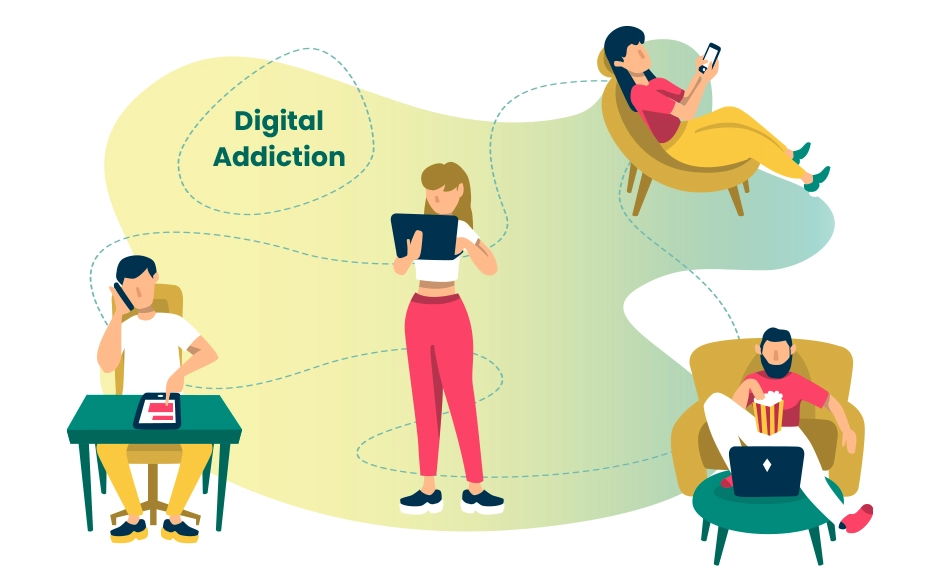
In today’s hyperconnected world, screens are everywhere. Smartphones, social media platforms, online games and short-form videos have become part of everyday life for teenagers and young adults. While technology offers convenience, connection and entertainment, growing scientific research shows that excessive digital use can have serious consequences for mental health.

What once seemed like harmless scrolling is now being studied as a form of behavioral addiction. Researchers have discovered that excessive screen time affects mood, sleep, attention, and even brain structure. For adolescents in particular, the risks are significantly higher because their brains are still developing. 

At Veda Rehbailitation and Wellness, mental health professionals increasingly see individuals struggling with digital dependency alongside issues such as anxiety, depression, and burnout. Understanding the science behind digital addiction is the first step toward healthier technology use.

Below are ten key research-backed insights that explain how excessive screen time affects mental health and why awareness is so important today.

1. The “Three-Hour” Danger Zone

One of the most important findings in recent digital health research is the concept of the “three-hour danger zone.”

Studies show that adolescents who spend more than three hours per day on social media face double the risk of experiencing poor mental health outcomes.

These outcomes are not just mild emotional issues. Research directly links excessive social media use with:

  • Clinical depression
  • Anxiety disorders
  • Emotional distress
  • Lower self-esteem

The problem becomes worse because social media platforms encourage continuous engagement. Features like infinite scrolling, algorithm-based recommendations and constant notifications make it easy for users to spend far more time online than they intended.

For teenagers whose emotional regulation systems are still developing, this constant exposure can increase feelings of comparison, insecurity and loneliness.

At Veda Rehabailitation and Wellness, clinicians often emphasize that moderation and mindful use of social media are essential, especially for adolescents whose mental health may already be vulnerable.

2. The Illusion of Choice: Understanding the Dopamine Loop

Many people believe excessive phone use is simply a matter of poor discipline. However, neuroscience shows that the issue is far more complex.

Digital platforms are intentionally designed to trigger what psychologists call “variable ratio reinforcement.

This system works similarly to slot machines.

Users do not know when the next reward will appear, but they keep checking in anticipation of it.

Examples include:

  • Notifications
  • Likes and comments
  • New messages
  • Viral content suggestions

Each unpredictable reward triggers dopamine release in the brain’s nucleus accumbens, the same reward system involved in substance addiction.

This creates a dopamine loop, where the brain begins craving repeated engagement.

Over time, users feel compelled to check their phones constantly. What appears to be “choice” becomes a compulsive behavioral pattern.

Experts at Veda, often explain that problematic screen use should be understood as a structurally induced behavioral addiction, not simply a lack of willpower.

3. Screen Time Can Alter Brain Structure

Perhaps the most concerning discovery in recent research is that excessive screen exposure may actually change the brain’s physical structure.

A condition known as Screen Dependency Disorder (SDD) shares several neurological similarities with substance addictions like alcohol or drugs.

These include disruptions in brain pathways responsible for:

  • Executive control
  • Decision-making
  • Emotional regulation

Research also suggests that individuals who show high levels of mobile phone dependency often have reduced grey matter volume in dopamine receptor-rich regions of the brain.

Grey matter plays a key role in processing information, controlling impulses and regulating behavior.

Even more concerning, studies indicate that the severity of screen dependency correlates with lower dopamine receptor availability. When this happens, the brain becomes less responsive to normal rewards.

This may explain why individuals with severe digital addiction often experience:

  • Loss of control over usage
  • Compulsive behavior
  • Difficulty feeling satisfaction offline

Clinicians at Veda Rehabilitation and Wellness emphasize that early awareness and intervention can prevent long-term neurological effects.

4. Short-Form Content and “Acquired ADHD”

Short-form video platforms have exploded in popularity in recent years. Apps featuring fast, highly stimulating content such as quick reels or viral clips are designed to deliver instant gratification within seconds.

While entertaining, this type of content can significantly affect attention span.

Chronic consumption of rapid-reward media gradually trains the brain to expect constant stimulation. As a result, normal activities like studying, reading, or working on long-term tasks may begin to feel boring or difficult.

Researchers now observe that heavy exposure to short-form content can lead to behaviors that mimic Attention Deficit Hyperactivity Disorder (ADHD).

These behaviors include:

  • Impulsivity
  • Difficulty concentrating
  • Reduced attention span
  • Inability to sustain focus on complex tasks

Some experts call this phenomenon “acquired ADHD.”

While it may not be a formal diagnosis, the symptoms are real and increasingly common among young digital users.

Professionals at Veda, encourage digital balance and mindful media consumption to protect long-term cognitive health.

5. Sleep Disruption: The Primary Pathway to Emotional Distress

One of the most powerful ways digital addictions affect mental health is through sleep disruption.

Excessive nighttime screen use interferes with the body’s natural sleep cycle in several ways:

Blue Light Exposure

Smartphone and tablet screens emit blue light, which suppresses melatonin production. Melatonin is the hormone responsible for regulating sleep.

When melatonin is reduced, the brain stays alert longer, delaying sleep.

Delayed Bedtimes

Social media, gaming, and streaming platforms often encourage “just one more video” behavior, pushing bedtime later and later.

Circadian Rhythm Disruption

Over time, irregular sleep patterns disrupt the body’s internal clock, known as the circadian rhythm.

Poor sleep has been directly linked to:

  • Increased anxiety
  • Mood disorders
  • Reduced stress tolerance
  • Irritability
  • Emotional instability

Researchers now believe sleep disruption is the primary pathway linking excessive screen use to severe mental health problems.

At Veda, improving sleep hygiene is often one of the first steps in treating digital dependency.

6. The “ACE” Triad of Gaming Addiction

Gaming addiction has become a major global concern, particularly among adolescents and young adults.

Clinical researchers describe the psychological drivers of gaming addiction using the “ACE triad.”

ACE stands for:

Anonymity

Players can hide their real identity, reducing social anxiety.

Convenience

Games are accessible anytime through phones, computers or consoles.

Escape

Gaming offers an immersive environment where users can temporarily forget real-world stress, trauma or emotional pain.

Together, these three elements create a powerful coping mechanism for individuals dealing with:

  • Social isolation
  • Anxiety
  • Depression
  • Trauma

However, when gaming becomes the primary way, someone deals with emotional challenges, it can develop into a compulsive behavior.

Therapeutic programs at Veda Rehabilitation and Wellness often focus on helping individuals build healthier coping strategies and emotional resilience.

7. The Blurred Line Between Gaming and Gambling

Modern video games increasingly incorporate elements traditionally associated with gambling.

One major example is loot boxes which are virtual reward systems where players spend money for a chance to receive rare items or upgrades.

These systems are designed with mechanics similar to slot machines, where outcomes are random and unpredictable.

Players often feel encouraged to spend more money to increase their chances of receiving valuable rewards.

Other monetization systems include:

  • Micro-transactions
  • In-game purchases
  • Randomized reward crates

For young users, this exposure can normalize risky financial behaviors long before adulthood.

Experts warn that the growing overlap between gaming and gambling may increase the likelihood of future addictive behaviors.

Awareness and education about these risks are important steps toward prevention.

8. The Direct Link to Suicidal Thoughts

One of the most alarming findings in digital addiction research involves the relationship between excessive screen use and suicidality.

A large longitudinal study tracking over 4,000 adolescents revealed troubling patterns.

Teenagers who showed highly addictive trajectories for smartphones, social media, or video games had roughly double the risk of suicidal thoughts and behaviors compared to those with controlled digital habits.

Researchers believe several factors contribute to this increased risk:

  • Social comparison and cyberbullying
  • Sleep deprivation
  • Emotional isolation
  • Exposure to harmful content
  • Increased anxiety and depression

These findings highlight the importance of recognizing digital addiction as a serious mental health issue rather than simply a lifestyle concern.

Mental health professionals at Veda Rehabilitation and Wellness stress the importance of early intervention and supportive treatment for individuals experiencing digital dependency.

9. Reducing Screen Time Brings Immediate Benefits

The encouraging news is that reducing screen exposure can quickly improve mental well-being.

A randomized controlled trial found that participants who limited smartphone use to two hours or less per day for three weeks experienced significant improvements in several areas.

These included:

  • Better sleep quality
  • Lower stress levels
  • Reduced depressive symptoms
  • Improved overall mood

These results demonstrate that the relationship between screen time and mental health is causal, not just correlational.

In other words, reducing digital use can directly improve mental health.

At Veda, digital detox strategies and structured lifestyle changes are often used to help individuals regain control of their screen habits.

10. Universal Saturation and Growing Self-Awareness

Today’s generation of teenagers has grown up entirely in the digital age.

Research shows that up to 95% of youth aged 13 to 17 use social media, and more than one-third report using it almost constantly.

Despite this widespread usage, many teenagers are becoming aware of the issue.

Surveys indicate that around 45% of teenagers believe they spend too much time on social media.

This level of self-awareness is important because it suggests that many young people already recognize the need for healthier digital boundaries.

Parents, educators and mental health professionals can support this awareness by encouraging open conversations about technology use.

Programs at Veda Rehabilitation and Wellness often include family education and digital wellness strategies to help individuals create a healthier relationship with technology.

Moving Toward Healthier Digital Habits

Technology itself is not the enemy. Smartphones, social media and digital platforms can offer connection, creativity, and learning opportunities.

However, when digital engagement becomes excessive, it can negatively affect mental health, sleep, attention and emotional well-being.

The goal is not complete avoidance but balanced and mindful use.

Some practical steps include:

  • Setting daily screen time limits
  • Avoiding screens before bedtime
  • Creating tech-free zones at home
  • Encouraging offline hobbies and activities
  • Practicing regular digital detox periods

For individuals who feel unable to control their digital habits or who are experiencing anxiety, depression or sleep issues related to screen use, professional support can be extremely helpful.

At Veda, specialists provide comprehensive treatment for behavioral addictions, including digital dependency, using evidence-based therapies and holistic recovery approaches.

Digital addiction is quickly emerging as one of the defining mental health challenges of the modern era.

Scientific research now shows that excessive screen use can:

  • Affect brain structure
  • Disrupt sleep
  • Reduce attention span
  • Increase anxiety and depression
  • Raise the risk of suicidal thoughts

The good news is that awareness is growing. Many young people already recognize the problem and are open to making healthier changes.

By understanding the science behind digital addiction and encouraging balanced technology use, individuals, families and communities can protect mental well-being in the digital age.

If you or someone you care about is struggling with digital dependency or related mental health challenges, seeking professional guidance can be a powerful first step toward recovery and healthier living.

Research Paper exclusively written for Veda Rehabilitation and Wellness Private Limited by Ms. Shruthi Temkar, Candidate of M.S.P.H at Johns Hopkins University, Maryland, USA.

Leave A Comment

Your email address will not be published. Required fields are marked *