Cognitive Behavioral Therapy (CBT): What It Is, How It Works & Who It Helps

  • Home
  • Addiction
  • Cognitive Behavioral Therapy (CBT): What It Is, How It Works & Who It Helps

Addiction Never Happens in Isolation: Understanding the Family Impact

If you’ve ever felt trapped in a spiral of anxious thoughts, struggled to break free from self-destructive patterns, or watched a loved one fight an invisible battle with addiction or depression, you’re not alone. And the good news is: there is a way forward. 

Cognitive Behavioral Therapy, commonly known as CBT, is one of the most well-researched and clinically proven forms of psychotherapy in the world. It’s structured, practical, and most importantly, it works. 

At Veda, CBT is a cornerstone of our personalised treatment programmes for anxietydepressionaddiction, trauma, and other mental health conditions. In this guide, we’ll walk you through what CBT is, how it works, who it can help, and what to expect from the process. 

📞Not sure if CBT is right for you? Speak with our clinical team — free and completely confidential.

Call (+91) 81518 30000 or WhatsApp us today. 

What Is Cognitive Behavioral Therapy?

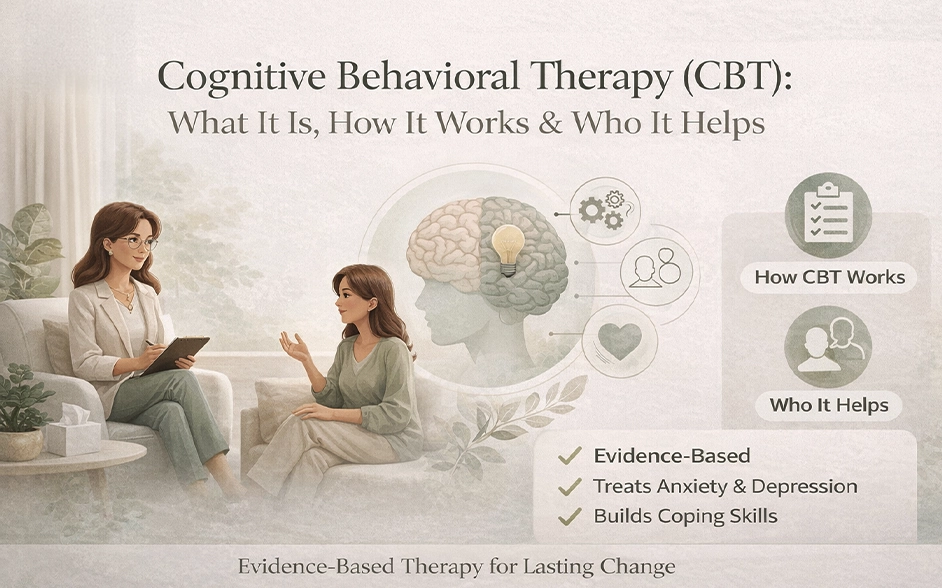
Cognitive Behavioral Therapy is a structured, goal-oriented form of talk therapy that works by helping you identify and change unhelpful thought patterns and the behaviours they drive. 

The concept is grounded in a simple but powerful insight: 

Your thoughts shape your feelings. Your feelings drive your actions. Change your thoughts — and you begin to change your life. 

When our thinking becomes distorted through catastrophising, self-blame, or all-or-nothing patterns, it creates a cycle of emotional pain and unhealthy behaviour. CBT helps you recognise, challenge, and break that cycle. 

Developed by psychiatrist Aaron T. Beck in the 1960s, CBT has since become the gold standard in evidence-based mental health treatment, with thousands of clinical trials supporting its effectiveness across a wide range of conditions. 

How Does CBT Work?

CBT follows a structured, collaborative process. Unlike some forms of therapy that focus heavily on the past, CBT is present-focused, it concentrates on what you can change today. 

Step 1: Identifying Automatic Negative Thoughts

Most of us have thoughts running in the background that we rarely stop to question. These automatic thoughts often sound like: 

  • “I always mess things up.” 
  • “Nobody really cares about me.” 
  • “If I fail at this, everything is over.” 

These are called cognitive distortions exaggerated, often irrational thought patterns that fuel anxiety, depression, and destructive behaviour. Your CBT therapist will help you bring these to the surface and understand their impact.

Step 2: Challenging and Reframing Your Thoughts

Once a distorted thought is identified, CBT doesn’t simply tell you to ‘think positive.’ Instead, it teaches you to evaluate the evidence like a scientist examining a hypothesis. 

You might be asked: 

  • Is this thought completely accurate?
  • What evidence supports it? What contradicts it? 
  • What would I tell a close friend who had this thought? 

Through this process, ‘I always mess things up’ might become ‘I’ve had setbacks, but I’ve also achieved things I’m proud of.’ That shift small as it sounds can be genuinely life-changing. 

Step 3: Changing Behaviour Patterns

Thoughts and behaviours are deeply intertwined. CBT addresses both. Depending on your needs, sessions may include: 

  • Gradual exposure exercises for anxiety and phobias 
  • Behavioural activation techniques for depression 
  • Trigger identification and relapse prevention for addiction 
  • Stress management and emotional regulation skills 

Between sessions, you’ll also be given practical exercises to practise an important part of making lasting change. 

🧠 Veda Rehabilitation and Wellness team integrates CBT into personalised treatment programmes for anxiety, depression, addiction, and trauma. Reach out to learn how we can help. 

What Conditions Does CBT Treat?

CBT is one of the most versatile evidence-based therapies available. It has strong clinical support for the following conditions: 

Condition How CBT Helps
Anxiety Disorders Reduces avoidance, builds tolerance to uncertainty, calms catastrophic thinking
Depression Breaks cycles of withdrawal and hopelessness; rebuilds motivation and self-worth
Addiction & Substance Use Identifies triggers, builds coping skills, develops relapse prevention strategies
Trauma & PTSD Safely processes traumatic memories and reduces emotional reactivity
OCD Exposure and Response Prevention (ERP) disrupt obsessive-compulsive cycles
Stress & Burnout Teaches sustainable thinking patterns and evidence-based stress management
Eating Disorders Addresses distorted body image and food-related thought patterns

CBT and Addiction Recovery

Addiction rarely exists in isolation, it’s almost always intertwined with deeply ingrained thought patterns. CBT is particularly powerful in addiction treatment because it works at the source: the thinking that sustains substance use. 

Common thoughts CBT addresses in recovery include: 

  • “I can’t cope with this stress unless I drink.” 
  • “One time won’t hurt, I’ll stop after this.” 
  • “I’ve already relapsed, so there’s no point trying anymore.” 

At Veda, CBT is integrated into comprehensive addiction recovery programmes alongside medical detoxindividual therapygroup sessions, and holistic wellness creating a full continuum of care that addresses mind, body, and spirit. 

A Message For Anyone Struggling With Addiction

Many people are unsure what to expect from therapy. Here’s what a typical CBT session looks like at Veda Wellness World: 

PhaseSession ComponentWhat Happens
1AssessmentYour therapist explores your current concerns, emotional triggers, and personal goals
2Goal SettingTogether, you define clear, measurable goals for therapy
3Skill BuildingIdentifying thought patterns, practising coping techniques, and reviewing homework
4Between SessionsStructured exercises to reinforce new thinking and behaviour patterns in daily life

How Long Does CBT Take?

CBT is intentionally time-limited, one of the reasons it’s so practical. Most people begin noticing meaningful changes within: 

  • 8–12 sessions for anxiety, mild depression, and specific phobias 
  • 16–20 sessions for more complex conditions, trauma, or co-occurring disorders 
  • Ongoing structured programmes for addiction recovery, integrated with residential or intensive outpatient care 

The pace depends on your goals, the complexity of your concerns, and how actively you engage with the between-session exercises. At Veda Rehabilitation and Wellness, your programme is always tailored to your individual needs, never a one-size-fits-all approach. 

Why Is CBT So Effective? The Evidence

CBT isn’t just popular, it’s proven. Here’s why clinical experts worldwide recommend it: 

  • Evidence-based: Backed by over 1,000 clinical trials and decades of independent research 
  • Practical skills-focused: You leave every session with actionable tools you can use immediately
  • Empowering: You learn to become your own therapist, building lifelong resilience 
  • Present-focused: Concentrates on what you can do now, rather than dwelling on the past 
  • Measurable: Goals are tracked and progress is visible, session by session 

Is CBT Right for You?

CBT tends to be particularly well-suited for people who: 

  • Want a structured, goal-oriented approach to therapy 
  • Are ready to actively participate and practise skills between sessions 
  • Are dealing with specific patterns, anxious thinking, low mood, addiction urges, trauma responses 
  • Prefer measurable progress over open-ended exploratory therapy 

 If you’re not sure whether CBT is the right fit, our clinical team at Veda offers a thorough assessment to help you find the most effective path forward whether that’s CBT, DBT, trauma-informed care, or a combination of approaches. 

Frequently Asked Questions Related CBT

What is cognitive behavioral therapy in simple terms?

Cognitive Behavioral Therapy (CBT) is a type of talk therapy that helps you identify negative or distorted thoughts, challenge them, and replace them with healthier patterns. It’s a practical, structured approach that creates real change, not just insight. 

Many people notice meaningful improvement within 8–12 sessions. For more complex conditions like addiction or trauma, 16–20 sessions are common. Your therapist at Veda will discuss an appropriate timeline during your initial assessment.

Yes. CBT is one of the most evidence-backed therapies for addiction. It helps identify high-risk situations and triggers, replace substance-related thought patterns, build relapse prevention strategies, and develop healthier emotional coping skills. 

Absolutely. CBT is highly effective for both. It addresses the thought distortions that drive anxiety and the withdrawal behaviours that sustain depression, often within the same personalised programme at Veda. 

CBT and medication serve different but complementary roles. Medication manages symptoms; CBT changes the underlying patterns. For many conditions, the most effective approach combines both which our clinical team at Veda can help you navigate. 

Unlike psychodynamic therapy, which explores childhood and unconscious conflicts, CBT is present-focused and skill-based. It teaches you practical tools you can use between sessions and builds lasting self-management skills over time.

Ready to Take the First Step? 

If you or someone you love is struggling with anxiety, depression, addiction, or trauma, our clinical team at Veda Wellness World is here to help. CBT is just one part of a comprehensive, compassionate treatment approach tailored to your unique needs.

📍 Centres in MumbaiNew Delhi Bengaluru 

📞 (+91) 81518 30000   |   💬 WhatsApp Available   |   🔒 Completely Confidential 

👉 Visit: vedawellnessworld.com 

Leave A Comment

Your email address will not be published. Required fields are marked *