When Is Rehab Actually Needed? Key Signs You Shouldn’t Ignore

  • Home
  • Addiction
  • When Is Rehab Actually Needed? Key Signs You Shouldn’t Ignore

Many people ask themselves quiet questions late at night.

“When should I go to rehab?”

“Do I need rehab, or can I handle this on my own?”

“Are these signs serious enough, or am I just overthinking?”

If these thoughts have crossed your mind even once, it is important to pause and listen. Addiction does not usually arrive suddenly. It grows slowly, silently, and often hides behind excuses, denial, and fear. By the time people realize what is happening, the damage is already deep.

Understanding when to go to rehab, recognizing the signs rehab is needed, and knowing that help exists can change and even save lives.

This blog will help you understand the reality of rehab, break common myths, and show how seeking help is not a weakness, but a powerful act of self-respect and courage.

Understanding Rehab: What It Really Means

Rehab is not a punishment.

It is not a place for “failed” people.

It is not the end of freedom.

Rehab is a safe, structured space where individuals receive medical care, emotional support, therapy, and guidance to overcome addiction and rebuild their lives.

If you are asking “do I need rehab?”, it usually means something inside you already knows that things are not under control anymore.

When To Go To Rehab: Key Signs You Shouldn’t Ignore

Many people wait too long because they believe their situation is “not that bad.” But addiction does not need to reach rock bottom before help is needed.

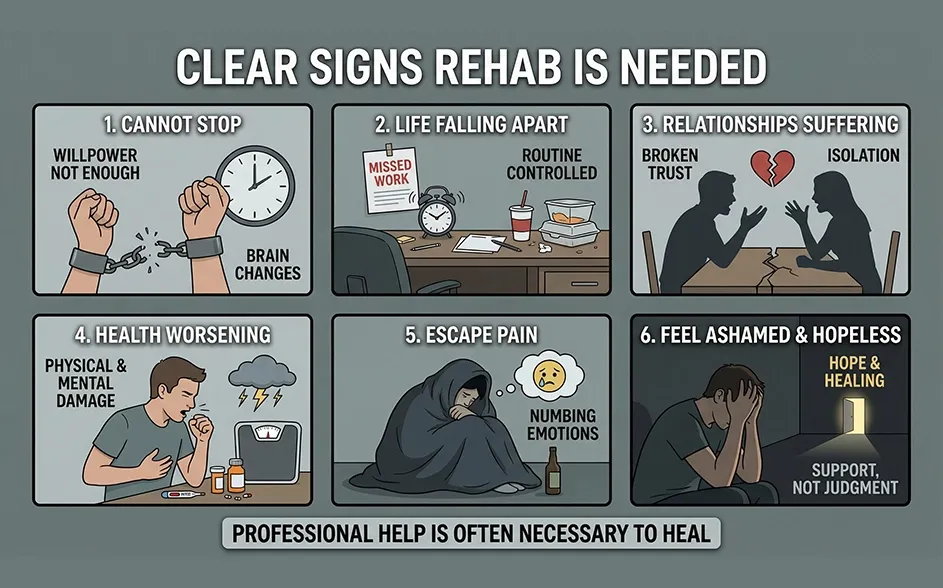
Here Are Some Clear Signs Rehab Is Needed:

1. You cannot stop even when you want to

  • You promise yourself you will stop tomorrow.
  • You try to cut down.
  • You fail again and again.

If willpower alone is not working, it is a strong sign when to go to rehab. Addiction changes the brain, and professional help is often necessary to heal it.

2. Your daily life is falling apart

  • Missing work or school
  • Neglecting responsibilities
  • Losing interest in hobbies
  • Poor sleep and eating habits

When addiction starts controlling your routine, it is no longer casual use. This is one of the most serious signs rehabs is needed.

3. Your relationships are suffering

  • Constant arguments
  • Broken trust
  • Isolation from family and friends
  • Lying to people you love

If addiction is damaging your relationships, it is time to ask honestly: do I need rehab?

4. Your health is getting worse

  • Frequent illness
  • Weight changes
  • Anxiety, depression, or mood swings
  • Memory loss or blackouts

Ignoring physical and mental health damage can lead to long-term consequences. Rehab provides medical and psychological care that self-control cannot.

5. You use substances to escape pain

If you drink or use drugs to numb emotional pain, trauma, stress, or loneliness, it is a serious warning sign. Rehab helps address the root cause, not just the habit.

6. You feel ashamed, guilty, or hopeless

  • Shame keeps people trapped in addiction.
  • Hope opens the door to healing.

If you feel stuck, lost, or ashamed, these emotions are signs that support is needed and not judgment.

Why People Shy Away from Rehab

Even when people know when to go to rehab, many delay it. Why?

Fear of Judgment

People worry:

“What will society say?”

“What will my family think?”

Denial

“I can stop anytime.”

“It’s not that serious.”

Financial Concerns

Many assume rehab is unaffordable.

Myths and Misunderstanding

People imagine rehab as a prison-like place with harsh treatment.

These fears often stop people from seeking help and addiction grows stronger during the delay.

The Long-term Damage of Avoiding Rehab

Avoiding rehab does not make addiction disappear. It makes it worse.

Physical damage

  • Liver disease
  • Heart problems
  • Brain damage
  • Weakened immunity

Mental health decline

  • Severe anxiety
  • Depression
  • Psychosis
  • Suicidal thoughts

Relationship breakdown

  • Divorce
  • Estrangement from family
  • Loss of children’s trust

Financial ruin

  • Job loss
  • Debt
  • Legal issues

Understanding when to go to rehab early can prevent years of irreversible damage.

Common Myths Around Rehab and The Truth

Myth 1: Rehab is only for “Severe” Addicts

Truth: Early treatment leads to better recovery outcomes.

Myth 2: Rehab means losing control

Truth: Rehab helps you regain control of your life.

Myth 3: Rehab never works

Truth: With the right support and aftercare, recovery is possible.

Myth 4: Rehab is shameful

Truth: Seeking help is a sign of strength and self-awareness.

Breaking the stigma and seeking help

Stigma keeps people silent. Silence keeps addiction alive.

Talking openly about addiction as a health condition, not a moral failure, is the first step toward healing.

You deserve help.

You deserve peace.

You deserve a healthy life.

Asking “do I need rehab?” is not weakness. It is courage.

Voluntary vs Involuntary Rehab: What’s the difference?

Voluntary Rehab

  • The individual chooses treatment themselves
  • Higher motivation
  • Better long-term outcomes

Involuntary Rehab

  • Family or legal system intervenes
  • Used in severe or life-threatening cases
  • Still effective with proper care

Both approaches can save lives. The goal is always recovery, safety, and dignity.

Why choose a luxury Rehab like Veda Rehabilitation and Wellness?

Not all rehabs are the same. A healing environment plays a powerful role in recovery.

What makes Veda Rehabilitation stand out

Personalized Treatment Plans 

Every individual is unique. Veda focuses on customized care instead of one-size-fits-all programs.

Expert Medical and Therapeutic Team 

Psychiatrists, psychologists, doctors, therapists, and wellness experts work together to support recovery.

Holistic Healing Approach

Veda integrates:

Comfort, Privacy, and Dignity

A calm, luxurious environment helps individuals heal without fear, shame, or discomfort.

Strong Focus on Mental Health

Addiction is deeply connected to mental health. Veda treats both together.

Treatment Cost at Veda Rehab

The cost of treatment at Veda varies depending on duration of stay and selection of rooms

The cost of twin sharing room is 2,85,000/- Rs and private room is 4,85,000/-Rs per month (inclusive of taxes etc). It includes all therapies and overall treatment needed for the patient.

Veda offers transparent pricing, and treatment plans are designed to provide value, quality, and long-term recovery support. Many people find that the cost of rehab is far less than the long-term financial and emotional cost of addiction.

For exact pricing, it is always best to speak directly with the Veda admissions team for guidance and clarity.

Recovery is possible and it starts with one decision

If you are still wondering when to go to rehab, remember this:

  • You do not need to lose everything to deserve help.
  • You do not need to suffer more to prove anything.
  • You do not need to do this alone.
  • Recovery begins the moment you choose yourself.

Frequently Asked Questions (FAQs)

1. How do I know when to go to rehab?

If substance use is affecting your health, relationships, work, or mental peace, these are clear signs rehab is needed.

Many high-functioning individuals still need treatment. If control is slipping, it is time to ask do I need rehab honestly.

Loss of control, withdrawal symptoms, emotional distress, damaged relationships, and declining health are strong warning signs.

Luxury rehab like Veda offers personalized care, comfort, and holistic healing, which can significantly improve recovery outcomes.

Yes. Reputed centers like Veda maintain strict privacy and confidentiality for all clients.

Yes. Family support often plays a key role in recognizing when to go to rehab and encouraging treatment.

Leave A Comment

Your email address will not be published. Required fields are marked *