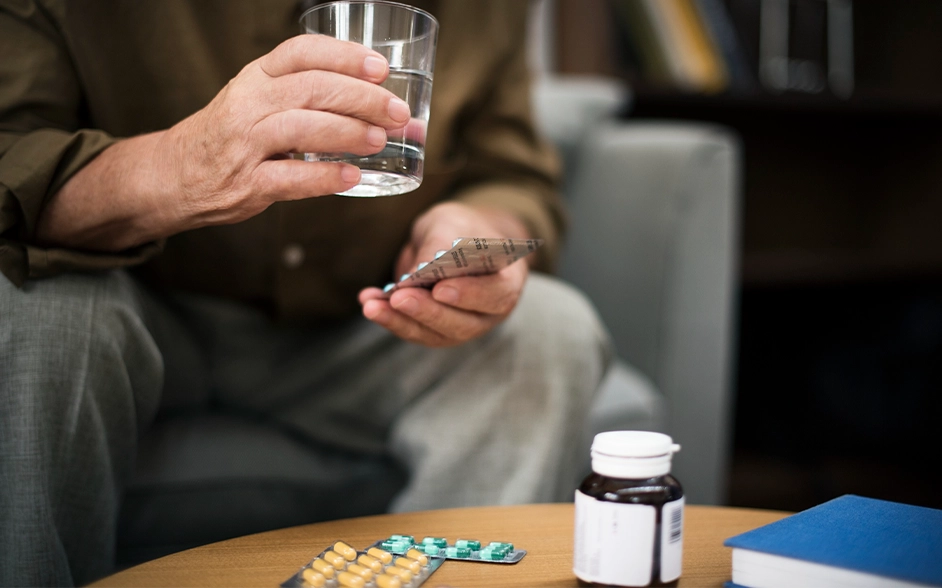
The Prescription Drug Trap: When Anxiety Medication Becomes a Dependency

  • Home
  • Addiction
  • The Prescription Drug Trap: When Anxiety Medication Becomes a Dependency

You did everything right. You weren’t chasing a high or breaking any rules. You went to a doctor because you couldn’t sleep or because the anxiety had become unbearable. They prescribed something to help, a small pill, taken exactly as directed. And for a while, it worked. You finally slept. You finally felt calm. 

Then, somewhere along the way, the pill that was helping you live became the thing you couldn’t live without. You’re not even sure when it happened. You only know that the thought of a night without it now fills you with dread. 

If this is your quiet, private fear, please know this: you have not failed and you are not weak. This is one of the most common and least talked-about forms of dependency in India, and it almost always begins exactly this way, in a doctor’s clinic, with the best of intentions. This is the prescription drug trap and understanding it is the first step out of it. 

The Rise of Prescription Drug Use in India

We tend to picture addiction as something that happens with illegal substances. But some of the most habit-forming drugs in the country come from a pharmacy, with a prescription and a doctor’s blessing. 

India’s National Survey on Extent and Pattern of Substance Use found that around 1.18 crore people (about 1.08% of those aged 10–75) use sedatives in a non-medical or non-prescription way. And that figure captures only misuseit doesn’t count the far larger number of people taking these medications exactly as prescribed who slowly become dependent over months and years. Worryingly, the survey also noted that sedative use is significant among children and adolescents. 

Why the rise? India is living through a mental health surge, anxiety, insomnia and stress are widespread, and access to proper psychiatric care remains limited. For an overwhelmed person and an overstretched system, a quick prescription often feels like the only available answer. The result is millions quietly relying on anxiety medication and sleeping pills, with prescription drug addiction in India hiding behind the respectability of a medicine bottle. 

Common Drugs that cause dependency

The medications most associated with this kind of dependency belong to a class called benzodiazepines and one in particular is extremely common in India. 

Alprazolam (often known by the brand name Alprax and sold globally as Xanax) is widely prescribed for anxiety and panic. It’s effective and fast-acting, which is exactly why it carries such a high risk. Indian researchers have specifically flagged alprazolam addiction in India as an emerging concern. Other commonly prescribed benzodiazepines include diazepam, lorazepam and clonazepam. 

Then there are sleeping pills, including the “Z-drugs” like zolpidem, prescribed for insomnia, which can create their own dependency. Sleeping pill addiction in India often follows a heartbreakingly familiar path: a stressful patch leads to a few sleepless nights; a doctor prescribes something to help and what was meant to be a short-term aid becomes a nightly necessity the person no longer feels able to sleep without. 

A pattern clinicians see often: a working woman or homemaker first seeks help for sleep trouble or anxiety, is prescribed a sedative, uses it for a year or two and only then realises she can no longer manage without it. This is benzodiazepine dependence in its most common, and most invisible, form. 

How Tolerance and Dependency Develop

Here’s the part that makes this so cruel: the very thing that makes these drugs work is what makes them so hard to stop. 

Benzodiazepines calm the brain by boosting a natural chemical called GABA, which slows down nervous-system activity and produces that sense of relief and relaxation. The problem is that the brain is always trying to find balance. When a drug keeps flooding it with calm, the brain adapts by becoming less sensitive to it. This is tolerance the same dose stops working, so you need more to feel the same effect. 

Over time, the brain also begins to rely on the drug to maintain its normal state. It essentially “forgets” how to stay calm on its own. Now, if the medication is reduced or stopped, the brain swings violently in the opposite direction, anxiety, restlessness, and sleeplessness come roaring back, often worse than before. This is physical dependence and it’s why anxiety medication dependency feels like a trap: stopping makes you feel terrible, so taking more feels like the only relief. The medication has quietly become both the problem and the apparent solution. 

Crucially, this can happen to anyone who takes these drugs regularly for long enough. It is not a sign of an “addictive personality” or weak willpower. It’s pharmacology. 

Signs You May Be Dependent

Because this dependency wears the disguise of legitimate treatment, it’s easy to miss. You don’t need every sign, a steady pattern of even a few is worth taking seriously. 

  • Needing a higher dose to get the same calm or sleep you once got from less.
  • Anxiety or panic at the thought of running out or always making sure you have a supply. 
  • Taking it for longer than your doctor originally intended, months or years past the plan. 
  • Using it to cope with everyday stress not just the original problem. 
  • Failed attempts to stop or cut down that left you feeling worse. 
  • Feeling unable to sleep or function without it. 
  • Seeking prescriptions from multiple doctors or feeling secretive about your use. 
  • Physical symptoms between doses, restlessness, irritability, racing heart or shakiness. 

That last point matters most. If skipping or delaying a dose brings on physical symptoms, your body has become dependent, and that’s a medical situation that deserves compassion and proper care, not shame. 

The Danger of Stopping Cold Turkey

This is the most important section in this entire article, so please read it carefully: never stop benzodiazepines or sleeping pills suddenly on your own. 

Unlike many substances, abruptly stopping benzodiazepines after regular use can be genuinely dangerous. Withdrawal can trigger severe symptoms including intense anxiety, insomnia, tremors and, in serious cases, seizures, which can be life-threatening. This is well-established medical fact: benzodiazepines and alcohol are among the few substances where sudden withdrawal can be fatal. 

This is exactly why so many people feel hopelessly stuck. They try to quit on their own, the withdrawal becomes unbearable or frightening and they go back on the medication, convinced they’ve failed. They haven’t failed, they’ve simply discovered, the hard way, that this is not a journey anyone should make alone. Coming off these drugs safely requires a gradual, carefully managed reduction under medical supervision. The good news is that with the right help, it can be done safely and comfortably.

Medically Supervised Detox at Veda

The safe way out of the prescription drug trap is a medically supervised drug detox in India, and it is far gentler than the white-knuckle ordeal people fear. 

At Veda Rehabilitation & Wellness, a chain of treatment centres across Mumbai, New Delhi, Bangalore and Sikkim, coming off prescription medication is handled with clinical care and dignity. The approach typically includes a thorough medical assessment to understand your history and health; a carefully structured, gradual tapering plan supervised by doctors, so your brain can relearn its natural balance without the dangerous swings of sudden withdrawal; and round-the-clock support to keep you safe and as comfortable as possible throughout. 

Just as importantly, real recovery means treating why the medication was needed in the first place. Because these drugs are so often prescribed for underlying anxiety, insomnia or stress, lasting freedom comes from integrated care, evidence-based therapy like Cognitive Behavioural Therapy (CBT) and healthy, non-medication tools to manage anxiety and sleep, so you don’t simply trade one dependency for another. 

Reaching for help here isn’t an admission of weakness. It’s the wise, brave step of someone who wants their calm back without the chains.

Frequently Asked Questions

Can you get addicted to anxiety or sleep medication even if you take it as prescribed? 

Yes. Physical dependence can develop in anyone who takes benzodiazepines or sleeping pills regularly for long enough, even exactly as directed. It’s a matter of pharmacology, not willpower, the brain adapts and begins to rely on the drug.

Alprazolam is effective but fast-acting, which gives it a high potential for tolerance and dependence. Indian researchers have specifically flagged it as an emerging drug of misuse, which is why it should only be used under careful medical guidance. 

Warning signs include needing higher doses, anxiety about running out, using it longer than intended, failed attempts to stop and physical symptoms like restlessness or a racing heart between doses. If stopping makes you feel physically unwell, dependence has likely developed. 

Yes, potentially very dangerous. Abruptly stopping after regular use can cause severe withdrawal, including seizures, which can be life-threatening. Benzodiazepines should only be stopped through a gradual taper under medical supervision. 

It’s a carefully managed, doctor-supervised process of gradually reducing the medication while keeping you safe and comfortable, alongside therapy to address the underlying anxiety or insomnia. Veda offers this across its 
centres in Mumbai, New Delhi, Bangalore and Sikkim. 

_______

Leave A Comment

Your email address will not be published. Required fields are marked *