Your Brain in Recovery: What Actually Happens When You Stop Using

  • Home
  • Addiction
  • Your Brain in Recovery: What Actually Happens When You Stop Using

If you have ever tried to stop drinking or using a substance, you know the fear that whispers in the background: What if I’ve done permanent damage? What if it’s too late for me? 

Here is the honest, science-backed answer and it is more hopeful than most people expect. The human brain is not a fixed, breakable object. It is a living, changing organ that is constantly trying to repair itself. Brain recovery from addiction is real, it is measurable and for most people, a great deal of it is possible. 

This is the story of what actually happens inside your head when you stop, hour by hour, month by month, and why that story is one of the most encouraging in all of addiction medicine. It matters here in India too, where around 16 crore people consume alcohol and over 5.7 crore live with harmful or dependent use, yet only a tiny fraction ever learns how forgiving their own biology can be. 

The Addicted Brain vs. The Healthy Brain

To understand healing, you first have to understand what addiction does. 

A healthy brain runs on a balanced reward system. Dopamine, the chemical messenger linked to pleasure, motivation and learning, is released in normal amounts when you eat a good meal, hug someone you love or finish a hard task. Your brain learns, “That was good. Do it again.” 

Addiction hijacks this system. Alcohol and drugs flood the brain with dopamine far beyond anything natural. Over time, the brain protects itself by turning down its own dopamine machinery, reducing receptors and dulling its response. This is why people with addiction often feel flat, anxious and joyless without the substance: ordinary life no longer registers as rewarding. The brain has been rewired to need the drug just to feel normal. 

Chronic heavy drinking also physically shrinks the brain. Research shows that long-term alcohol use reduces both grey matter (where the thinking cells live) and white matter (the wiring that connects them), which is part of why memory, judgment and coordination suffer. Understanding this is the foundation of sober brain science: addiction is not a lack of willpower. It is a brain operating under altered chemistry and structure. 

The good news? Much of that altering can be undone.

Timeline of Brain Healing: 24 Hours → 30 Days → 90 Days → 1 Year

The recovery timeline for sobriety is gradual, but the milestones are real. Here is roughly what the science suggests happens when you stop, understanding that everyone heals at their own pace. 

The first 24–72 hours: This is the hardest stretch. As the substance leaves the body, the brain, used to being suppressed or overstimulated, swings the other way. With alcohol especially, this can mean anxiety, shaking, sweating and in serious cases dangerous withdrawal seizures or delirium tremens. This is exactly why stopping heavy alcohol use suddenly and alone can be risky and why medical supervision matters in the early days. 

Around 30 days: This is where the science gets genuinely exciting. Brain-imaging studies show that grey matter volume can begin to recover within as little as two weeks of abstinence and that the biggest jump often happens between the first week and the first month of sobriety. People frequently report sharper thinking, steadier moods and clearer mornings around this point. 

Around 90 days: Healing continues, though more slowly. Studies tracking recovering individuals over months found significant volume increases across the frontal lobe (decision-making), cerebellum (coordination), and other regions during sustained abstinence. The “three-month wall” many people hit emotionally is also when deeper neural rewiring is quietly underway. 

Around one year: With a full year of sobriety, the brain has had time for substantial structural and chemical repair. Research on stimulant users found that dopamine system markers showed meaningful recovery after roughly 12 to 17 months of abstinence. Recovery is often partial, some changes can linger, but the direction is unmistakably toward healing. 

Neuroplasticity and Recovery

The single most important concept in how the brain heals after alcohol or drugs is neuroplasticity the brain’s lifelong ability to form new connections, rewire damaged pathways and adapt. 

The same plasticity that allowed addiction to take hold is the plasticity that allows recovery. When you stop using and start building new routines, exercise, therapy, sleep, real human connection, you are literally giving your brain new patterns to wire around. Old, drug-linked pathways weaken from disuse, while healthier ones strengthen. 

This is why neuroplasticity in addiction recovery is not just a comforting phrase. It is the mechanism. Studies even suggest that people whose grey matter recovers faster in early sobriety tend to have a better chance of staying abstinent, recovery and brain healing reinforce each other in a positive loop. 

Your brain wants to heal. Recovery is the act of getting out of its way and giving it the conditions to do so. 

Sleep, Dopamine and Cognitive Restoration

Three things repair the recovering brain more than almost anything else: sleep, time and the slow rebalancing of dopamine. 

Sleep is the brain’s nightly maintenance crew. Alcohol and many drugs wreck sleep architecture, robbing people of the deep and REM sleep that consolidate memory and clear metabolic waste. In early recovery, sleep is often disturbed, but as it normalises over weeks and months, mood, focus and emotional control improve dramatically. Restoring sleep is restoring the brain. 

Dopamine rebalancing is slower and can be frustrating. Because the brain dialled its reward system down during addiction, early sobriety can feel grey and unrewarding, a stage often called anhedonia. This is temporary. As receptors gradually recover, ordinary pleasures, food, music, laughter, achievement, start to feel good again. Knowing this is coming helps people push through the flat early weeks instead of relapsing in search of feeling. 

Cognitive restoration memory, attention, problem-solving, tends to follow structural healing. Many people notice their “brain fog” lifting across the first few months, though full cognitive recovery can take longer and may be partial in those with very long, heavy use. The brain rebuilds, but it rebuilds on its own schedule.

How Veda's Clinical Model Supports Brain Health

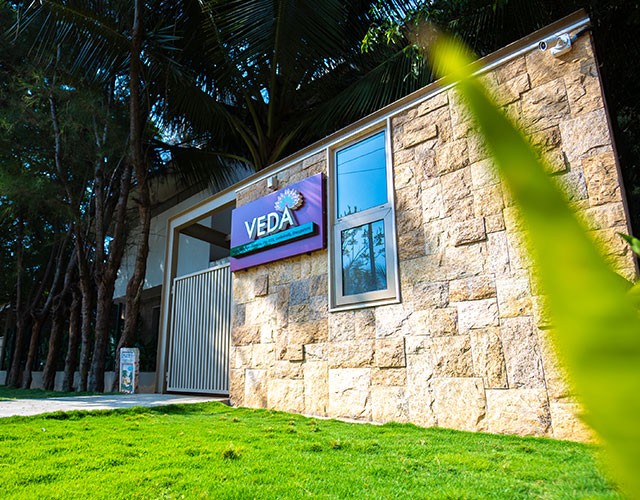
At Veda Rehabilitation & Wellness, recovery is treated as a process of brain healing, not just stopping a behaviour. Our role is to create the exact conditions the brain needs to repair. 

Across our centres in Mumbai, New Delhi, Bangalore and Sikkim that means medically supervised detox to keep the dangerous early hours safe, followed by integrated care that treats addiction alongside any underlying mental health condition, because anxiety, depression, and trauma often share the same neural circuits as addiction. It also means the unglamorous essentials that science says matter most: structured sleep, nutrition, movement, therapy and routine, all of which feed neuroplasticity. 

We do not see a patient as broken. We see a brain in the middle of healing, and we build the environment around it accordingly, with dignity and patience.

Why Professional Treatment Accelerates Healing

You can recover on your own. But professional treatment makes healing safer, faster and far more likely to last, and the science explains why. 

First, the dangerous early withdrawal period is managed medically, removing a major risk that derails (and sometimes endangers) people trying to quit alone. Second, treatment addresses the mental health conditions that so often drive substance use; healing only the addiction while ignoring the depression underneath leaves the door open for relapse. Third, structured programmes deliberately install the sleep, support and new routines that neuroplasticity needs, instead of leaving recovery to willpower in a stressful home environment. 

India has only about 9,000 psychiatrists for 1.4 billion people, so expert care is scarce and precious. Reaching it early changes outcomes. Every week of healing you give your brain compounds, and the sooner you start, the more your remarkable, adaptable brain can recover. 

It is not too late. For most people, it never was. 

Frequently Asked Questions (FAQs)

Q: Can the brain really recover from addiction? 

Yes. Thanks to neuroplasticity, the brain forms new connections and repairs many drug-related changes. Imaging studies show grey matter volume can begin recovering within about two weeks of abstinence, with healing continuing over months and years. Recovery is often partial but substantial.

The first 24–72 hours bring withdrawal and should ideally be medically supervised. Around 30 days, thinking and mood often improve as grey matter rebounds. By 90 days and one year, deeper structural and dopamine-system healing continues.

Stopping alcohol allows shrunken grey and white matter to begin recovering, with the largest gains often in the first month. Frontal-lobe and cerebellar regions show measurable volume increases over months of sustained sobriety.

It is the brain’s ability to rewire itself. The same process that let addiction take hold lets recovery happen; new healthy routines strengthen new pathways while drug-linked one’s fade. Faster early recovery is even linked to better odds of staying sober. 

Because addiction lowered your brain’s dopamine response, ordinary pleasures feel flat at first (anhedonia). This is temporary. As dopamine receptors recover, normal joys gradually return, a key reason not to give up in the early weeks.

It varies. Many notice clearer thinking within weeks to months, while dopamine and cognitive systems can take a year or more to substantially recover. Sleep, nutrition, therapy and professional support all speed the process.

Leave A Comment

Your email address will not be published. Required fields are marked *