Luxury Rehab vs Traditional Rehab: How to Choose the Right Care

  • Home
  • Addiction
  • Luxury Rehab vs Traditional Rehab: How to Choose the Right Care

Choosing a rehabilitation centre is one of the most important decisions a family can make and most families make it under enormous pressure. This guide explains the real differences between luxury and traditional rehab clearly, so you can decide with confidence.

Why Treatment Quality Matters

Addiction is a serious and widespread issue. According to the World Health Organisation, over 35 million people worldwide live with drug use disorders, and alcohol misuse contributes to 3 million deaths annually. In India, the NDDTC estimates that nearly 5.7 crore people require treatment for substance use disorders, yet only a fraction ever receive professional care. 

One key reason families delay? The fear of what rehab actually looks like. Understanding the difference between your options is the first step toward making a decision without that fear. 

What Is Traditional Rehab?

Traditional rehab centres offer structured, group-based care at an accessible cost. They have formed the backbone of addiction treatment for decades, and for many people, they work well. 

A standard programme typically includes medically supervised detox, group therapy as the core treatment, scheduled individual counselling, shared dormitory accommodation, and basic relapse-prevention education. 

The limitations appear when someone has complex needs, a dual diagnosis (addiction plus a mental health condition), a trauma history, professional privacy concerns, or a previous unsuccessful attempt at standard treatment. High patient-to-therapist ratios and standardised schedules make it difficult to adapt the programme to the individual.

What Is Luxury Rehab?

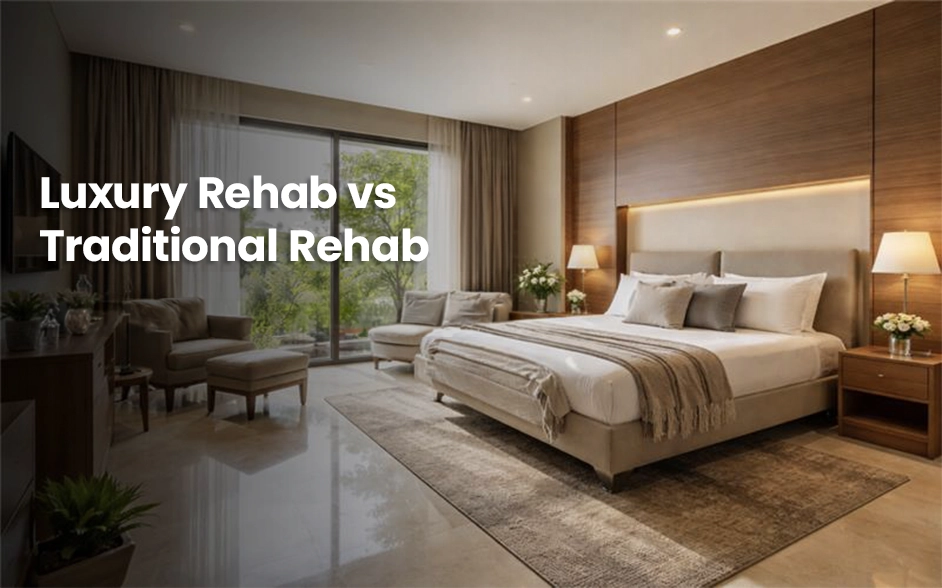
Luxury rehab is not about aesthetics. The defining feature is clinical depth: more therapist time per patient, a fully personalised treatment plan, and a broader range of therapies designed to address the root causes of addiction, not just the dependency itself. 

A premium programme typically includes a psychiatric evaluation on admission, a personalised treatment plan updated throughout the stay, private accommodation, holistic therapies (yogamindfulness, nutritional counselling, art therapy), structured family therapy, and comprehensive privacy protections. For professionals or public figures, discreet admission and identity protection are standard. 

Side-by-Side Comparison

Rehab Comparison
Criteria Luxury Rehab Traditional Rehab
Therapist Ratio 1:3 – 1:5 1:10 – 1:15
Accommodation Private room Shared dormitory
Treatment Plan Fully personalised Standardised protocol
Privacy High — discreet admission Limited in group settings
Holistic Therapies Yoga, mindfulness, nutrition Basic counselling only
Approx. Monthly Cost (IN) ₹80,000 – ₹2,50,000+ ₹15,000 – ₹50,000

The Three Differences That Actually Impact Recovery

1. Personalisation

Most relapses are rooted in something that standardised treatment never addressed, untreated trauma, chronic anxiety, professional burnout. Luxury rehab’s biggest clinical advantage is the ability to adapt the programme continuously as the person progresses, rather than moving everyone through the same schedule.

2. Privacy

For executives, doctors, or business owners, confidentiality is not a preference, it is a prerequisite for entering treatment. Traditional settings, with shared spaces and group programmes, cannot guarantee it. Luxury centres are built around it: small groups, private rooms, and discreet admissions. 

3. Holistic Care

Addressing physical dependency alone leaves the psychological drivers of addiction untouched. Therapeutic yoga, mindfulness, and nutritional rehabilitation are not optional extras in a well-designed luxury programme, they are part of the clinical plan, helping patients rebuild emotional regulation and physical health simultaneously.

Signs It May Be Time to Seek Help

If several of these patterns are present, a professional assessment is appropriate: 

  • Alcohol or drug use is increasing over time and is difficult to control 
  • Previous attempts to cut down or stop have not worked 
  • Mood changes — irritability, anxiety, emotional withdrawal — are now constant 
  • Work performance or relationships are being affected 
  • The person has expressed a desire to stop but feels unable to 

A professional assessment doesn’t commit anyone to treatment. It provides a clear clinical picture that makes the next decision much easier.


About Veda Rehabilitation & Wellness:

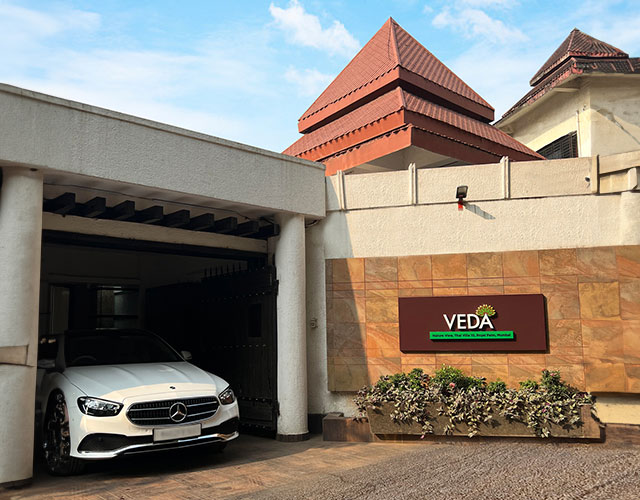
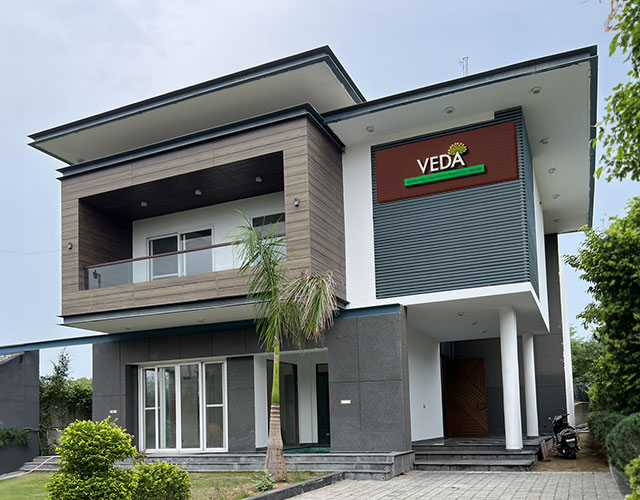
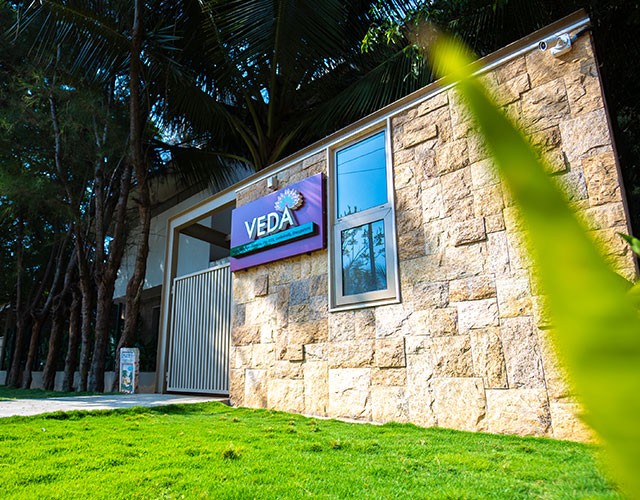
Veda is a premium rehabilitation centre in Mumbai offering personalised, evidence-based addiction and mental health treatment in a private, compassionate setting.

Our team includes experienced psychiatrists, clinical psychologists, and certified addiction counsellors. If you have questions or would like to understand your options, we welcome a confidential initial conversation — no commitment required.

Frequently Asked Questions

Is luxury rehab better than traditional rehab?

Not universally. Luxury rehab provides a higher therapist-to-patient ratio, greater personalisation, and a more private environment, which can meaningfully improve outcomes for individuals with complex needs, co-occurring mental health conditions, or privacy concerns. For others, a well-run traditional programme may be entirely appropriate. The right choice is the one that matches the person’s clinical picture, not the one with the highest price tag.

The core differences are: private accommodation, a fully personalised treatment plan (rather than a shared programme schedule), a lower patient-to-therapist ratio, a broader range of holistic therapies (yoga, mindfulness, nutrition, art therapy), and comprehensive privacy protections. The clinical team also tends to have more capacity to address dual diagnoses, addiction alongside depression, anxiety, or trauma within the same programme. 

India’s better luxury rehabilitation centres offer world-class clinical care at a fraction of what equivalent treatment costs in the UK or US. Benefits include: personalised programmes built around the individual rather than a fixed schedule, holistic therapies that address root causes alongside chemical dependency, private environments that make it easier for professionals to seek help discreetly, and strong family therapy components that support the broader healing process. 

Costs vary significantly by facility and programme. Traditional or government residential programmes typically range from ₹15,000 to ₹50,000 per month. Mid-range private facilities may charge ₹50,000 to ₹1,00,000 per month. Premium and luxury centres generally range from ₹80,000 to ₹2,50,000 or more per month, depending on the level of care, facilities, and programme duration. Always ask for a complete programme breakdown, understand what is included before comparing prices. 

The most practical differences are accommodation type (private versus shared), therapist access (individual sessions multiple times per week versus once or twice), the range of therapies available (holistic versus primarily group-based), and the confidentiality environment. For professionals, executives, or anyone who has hesitated to seek treatment for fear of exposure, privacy infrastructure is often the single most important practical difference. 

If repeated attempts to reduce or stop substance use have not worked, if daily functioning work, relationships, physical health is being affected, or if the person is expressing a desire to stop but feeling unable to do so, professional assessment is appropriate. An assessment doesn’t commit anyone to any particular treatment path. It provides a clinical picture. Starting that conversation is almost always the right first step. 

Leave A Comment

Your email address will not be published. Required fields are marked *