- Mumbai, Gangtok, New Delhi, Bangalore
- (+91) 81518 30000
- WhatsApp Now
- contact@vedawellnessworld.com
Alcohol is socially accepted in many cultures. A drink after work, a celebration with friends, or stress drinking often feels “normal.” Because of this, alcohol addiction can quietly grow without being noticed until it starts affecting health, relationships, and self-respect.
Many people delay seeking help because they believe they can handle it alone, detox at home, or stop “from tomorrow.” Others feel fear, shame, or stigma around rehab. But understanding the signs of alcohol addiction and knowing when to go to rehab for alcohol addiction can save years of struggle and even lives.
This blog explains the warning signs, the difference between alcohol detox vs rehab, why home detox often fails, and how professional treatment especially at Veda Rehabilitation and Wellness supports long-term recovery, emotional healing, and purpose in life.
Alcohol addiction is not a character flaw or lack of discipline. It is a medical and psychological condition that affects the brain’s reward system, emotions, and decision-making.
Over time:
This is why willpower alone is rarely enough.
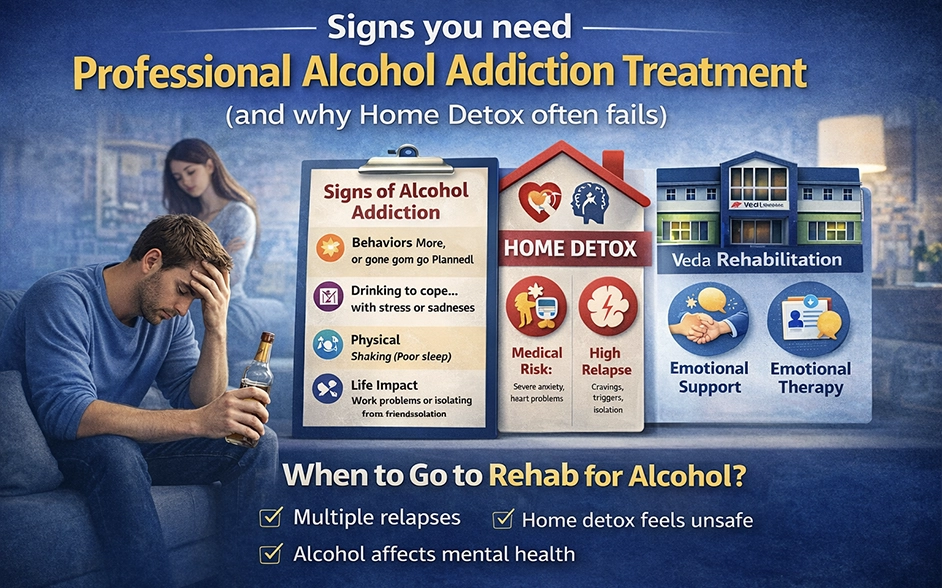
Recognising the signs of alcohol addiction early can prevent long-term damage. Some signs are obvious; others are subtle and easy to justify.
Behavioural Signs
Emotional & Mental Signs
Physical Signs
Life Impact Signs
If multiple signs are present, it’s a strong indicator of when to go to rehab for alcohol.
Many people ask, “Is it really that bad yet?” Rehab is not only for extreme cases. It’s meant for anyone whose life is being controlled by alcohol.
You should consider rehab if:
Choosing help early leads to faster, safer, and more sustainable recovery.
Understanding alcohol detox vs rehab is crucial. Many people think detox alone is enough but it rarely is.
What is Alcohol Detox?
Detox focuses on:
It is a short-term medical process, usually lasting a few days.
What Rehab actually is
Rehab includes detox plus:
Detox treats the body. Rehab treats the person.
Home detox may seem convenient or less embarrassing, but it carries serious risks.
1. Medical Risks
Alcohol withdrawal can cause:
Without medical supervision, detox can be dangerous.
2. No Emotional Support
At home:
The emotional reasons for drinking stay unresolved.
3. High Relapse Rate
Even if detox is completed:
This is why alcohol detox vs rehab is not a fair comparison and detox alone is incomplete.
A rehab is not a punishment or isolation centre.
A professional rehab is:
At Veda Rehabilitation and Wellness, rehab is designed as a personal recovery journey and not a rigid institution.
Many people delay help due to cultural stigma.
Common Myths
In reality:
The taboo keeps people stuck. Awareness sets them free.
In many families:
This stigma causes:
Rehab offers a judgment-free space to heal without labels.
Choosing rehab at the right time leads to:
People who enter rehab earlier have higher recovery success rates and fewer relapses.
Veda goes beyond standard treatment by focusing on who the person is and not just their addiction.
What makes Veda different
Many people struggling with addiction feel:
Veda helps clients:
This purpose-driven approach significantly improves long-term recovery.
After completing rehab:
With structured aftercare and purpose alignment, recovery becomes sustainable.
Common signs of alcohol addiction include loss of control over drinking, withdrawal symptoms, emotional dependence on alcohol, and negative impact on health, work, or relationships.
You should consider when to go to rehab for alcohol if repeated attempts to quit have failed, drinking is affecting mental health, or home detox feels unsafe or overwhelming.
Alcohol detox vs rehab differs in scope. Detox only removes alcohol from the body, while rehab treats emotional, psychological, and behavioural causes to prevent relapse.
Home detox often fails due to medical risks, lack of emotional support, exposure to triggers, and absence of relapse prevention strategies.
No. Going to rehab is a sign of self-awareness and strength. Addressing the signs of alcohol addiction early leads to better recovery outcomes.
Veda supports recovery through therapy, mental health care, career counselling, and purpose discovery helping clients rebuild a meaningful, balanced life.