Physical Effects of Phone Addiction You Should Never Ignore

  • Home
  • Addiction
  • Physical Effects of Phone Addiction You Should Never Ignore

Most people do not realize they have a digital addiction until life around them starts changing.

Sleep gets worse.

Focus disappears.

Relationships become distant.

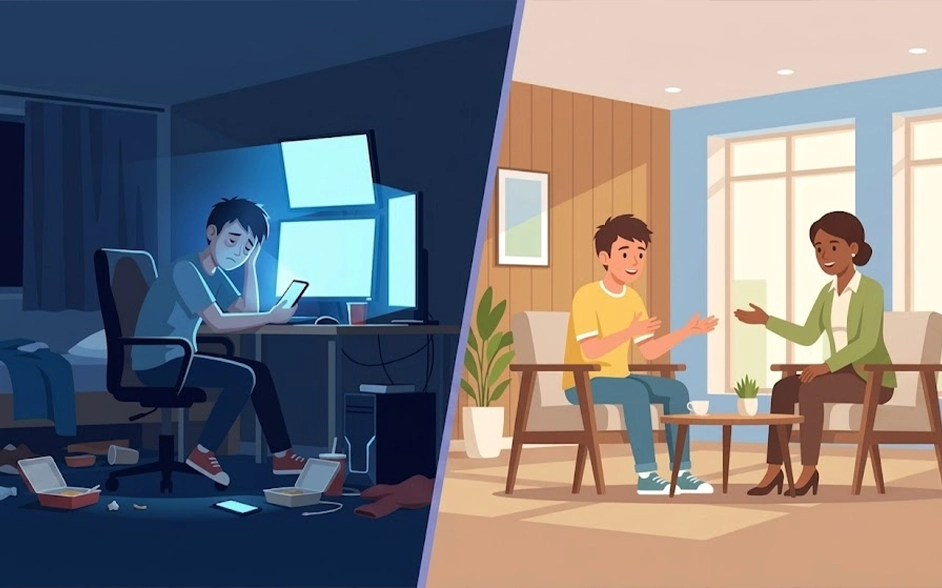
A teenager stops leaving their room.
An adult cannot sit through dinner without checking notifications.
Gaming sessions quietly stretch from one hour to eight.

At first, many people try fixing it themselves.

They delete apps.
Promise to reduce screen time.
Take short “digital detox” breaks.

Sometimes that works.

But sometimes it does not.

That is when the question becomes serious:

Should someone continue with self help, or is professional treatment necessary?

The answer depends on how deeply the addiction has affected the person’s emotional, mental and social functioning.

Why Gaming and Phone Addiction Are Becoming Serious Mental Health Concerns

Excessive gaming and phone use are no longer seen as “just bad habits.”

Mental health professionals increasingly recognize severe digital dependency as a form of behavioral addiction because it can affect:

  • Emotional regulation
  • Sleep
  • Concentration
  • Relationships
  • Academic performance
  • Work productivity
  • Self esteem
  • Physical health

The World Health Organization officially recognized Gaming Disorder as a diagnosable condition in 2019.

At the same time, growing research shows that compulsive social media and smartphone use may contribute to:

  • Anxiety
  • Depression
  • Loneliness
  • Emotional instability
  • Attention difficulties
  • Stress related burnout

That is why demand for gaming addiction rehab, rehab for screen addiction, and structured internet addiction recovery programs has increased globally.

Can Self Help for Phone Addiction Actually Work?

Yes. In mild cases, self intervention can absolutely help.

Many people successfully improve unhealthy screen habits by making structured lifestyle changes. Some common self help for phone addiction strategies include:

  • Deleting addictive app
  • Turning off notifications
  • Limiting gaming hours
  • Using screen time tracking apps
  • Avoiding devices before sleep
  • Creating screen free zones at home
  • Replacing screen time with hobbies or exercise
  • Practicing mindfulness and meditation

For people with early-stage digital dependency, these changes may significantly improve emotional balance and focus.

But there is an important difference between:
“I use my phone too much.”

and

“I feel emotionally dependent on screens and cannot stop.”

That distinction matters.

When Self Help Usually Stops Working

Self help becomes difficult when addiction is no longer just behavioral.

In many moderate to severe cases, screens become emotional coping mechanisms.

Gaming may help someone escape loneliness.
Social media may temporarily reduce anxiety.
Scrolling may numb stress or emotional discomfort.

At that stage, simply deleting apps often fails because the emotional need underneath remains unresolved.

This is why many people relapse quickly after short digital detox attempts.

The screen was never the only issue.

The emotional dependency was.

Signs Someone May Need Professional Help

Professional inpatient addiction treatment or structured therapy may be necessary if:

  • Screen use feels uncontrollable
  • Gaming continues despite serious consequences
  • Sleep cycles are severely disrupted
  • Anxiety or depression are increasing
  • School or work performance is declining
  • The person becomes emotionally aggressive without devices
  • Social isolation is worsening
  • Family relationships are breaking down
  • Self help attempts repeatedly fail

Many people entering a digital detox center say:
“I tried handling this myself for years.”

That sentence is very common.

What Makes Gaming Addiction Different From Normal Gaming?

Gaming itself is not unhealthy.

Many games improve:

  • Strategy
  • Coordination
  • Problem solving
  • Teamwork

The issue begins when gaming replaces healthy functioning.

Some signs that gaming may have crossed into addiction territory include:

  • Losing track of time constantly
  • Lying about gaming hours
  • Avoiding real life responsibilities
  • Emotional withdrawal
  • Neglecting hygiene or sleep
  • Irritability when unable to play
  • Using gaming to escape emotional pain

In severe cases, gaming becomes the person’s primary emotional world.

That is where professional support often becomes important.

What Happens in a Gaming Addiction Rehab Program?

A structured gaming addiction rehab or residential addiction treatment program focuses on more than just removing devices.

Treatment usually includes:

  • Psychological assessment
  • Emotional healing
  • Behavioral restructuring
  • Routine rebuilding
  • Sleep restoration
  • Therapy
  • Family counselling
  • Stress management
  • Healthy social reintegration

The goal is not punishment.

The goal is helping the brain and nervous system recover from chronic overstimulation and emotional dependency.

Why Inpatient Addiction Treatment Can Be More Effective

For severe addiction, environment matters.

This is one major reason inpatient addiction treatment can work better than self help in certain cases.

At home, people remain surrounded by:

  •  Triggers
  • Devices
  • Stress
  • Unhealthy routines
  • Emotional patterns
  • Unrestricted internet access

In contrast, a structured digital detox center creates temporary separation from those triggers.

This allows:

  • Emotional stabilization
  • Nervous system recovery
  • Healthier routine formation
  • Reduced overstimulation
  • Focused therapeutic work

It becomes easier for the brain to reset when constant digital stimulation is interrupted.

The Emotional Side of Screen Addiction

One thing many families misunderstand is this:

Digital addiction is rarely just about entertainment.

Often, it is deeply emotional.

Some people use screens to avoid:

  • Loneliness
  • Rejection
  • Social anxiety
  • Stress
  • Trauma
  • Boredom
  • Emotional emptiness

This is why addiction counselling vs self help is such an important discussion.

Self help usually focuses on behavior.

Counselling explores the emotional reasons behind the behavior.

Without emotional healing, many people simply replace one compulsive habit with another.

What Therapy Usually Focuses On

Professional treatment programs often include:

Cognitive Behavioral Therapy (CBT)

Helps individuals identify unhealthy thinking and behavioral patterns.

Emotional Regulation Therapy

Teaches healthier ways to manage stress, frustration and emotional discomfort.

Family Therapy

Especially important for teenagers struggling with gaming or phone addiction.

Mindfulness Based Therapy

Improves attention control and emotional awareness.

Behavioral Restructuring

Helps rebuild healthy routines, sleep patterns and daily structure.

This combination often creates much stronger long term recovery outcomes compared to self directed attempts alone.

What About Teenagers?

Teenagers are particularly vulnerable because the brain is still developing.

Areas linked to:

  •  Impulse control
  • Reward processing
  • Emotional regulation
  • Decision making

are still maturing during adolescence.

Excessive gaming or phone use during these years may affect:

  • Focus
  • Emotional stability
  • Social development
  • Sleep
  • Academic functioning

For teenagers with severe digital dependency, early intervention is extremely important.

The earlier treatment begins, the easier recovery often becomes.

Can Adults Need Rehab for Screen Addiction Too?

Absolutely.

Many adults quietly struggle with:

  • Compulsive phone checking
  • Doom scrolling
  • Binge watching
  • Gaming dependency
  • Work related digital burnout

Because adult screen addiction often hides behind “productivity,” it may go unnoticed for years.

Someone can appear highly functional while internally feeling:

  • Emotionally exhausted
  • Mentally overstimulated
  • Unable to disconnect
  • Anxious without devices

This is increasingly common in modern professional life.

Does Residential Addiction Treatment Mean No Technology Forever?

No.

This is one of the biggest misconceptions.

The goal of internet addiction recovery is not permanent technology avoidance.

Technology is part of modern life.

The goal is learning:

  • Healthy digital boundaries
  • Mindful usage
  • Emotional regulation
  • Balanced routines
  • Healthier coping mechanisms

Recovery is about regaining control, not becoming anti technology.

So… Which Actually Works Better?

The honest answer?

It depends on severity.

Self Help May Work Better When:

  • Addiction is mild
  • Emotional dependency is low
  • Functioning is still stable
  • Motivation for change is strong
  • Support systems are healthy

Inpatient or Professional Treatment May Work Better When:

  • Addiction is severe
  • Emotional distress is significant
  • Sleep and functioning are heavily affected
  • Self help repeatedly fails
  • Co existing anxiety or depression is present
  • Relationships or academics are deteriorating

There is no shame in needing professional support.

In fact, recognizing when self help is no longer enough is often a sign of emotional awareness, not weakness.

The Bigger Truth About Digital Addiction

Modern apps, games, and social media platforms are designed to hold attention.

Infinite scrolling, gaming rewards, notifications and algorithm driven content all activate the brain’s reward system repeatedly.

This means digital addiction is not simply a “discipline problem.”

It is a mental health issue that requires balance, awareness, boundaries and sometimes structured treatment.

And honestly, many people today are far more emotionally exhausted from screens than they realize.

Recovery Is About Reconnecting With Life Again

One of the most beautiful parts of recovery is often very simple.

Someone starts sleeping peacefully again.

A teenager laughs with family at dinner instead of staring at a screen.

An adult finally feels mentally calm for the first time in years.

Real recovery is not about becoming perfect.

It is about becoming present again.

FAQs

1. What is gaming addiction rehab?

Gaming addiction rehab is a structured treatment program that helps individuals reduce compulsive gaming behaviors through therapy, emotional support, routine rebuilding and behavioral interventions.

Yes, mild phone addiction may improve with lifestyle changes, screen limits, mindfulness and healthier routines. Severe emotional dependency may require professional support.

A digital detox center provides a structured environment where individuals reduce excessive screen exposure while receiving therapy, emotional support, sleep restoration and behavioral treatment.

Not always. Inpatient addiction treatment is usually recommended when digital addiction severely affects sleep, emotional health, relationships, academics or daily functioning.

Self help mainly focuses on changing habits independently, while addiction counselling explores the emotional, psychological and behavioral causes behind compulsive screen use.

Leave A Comment

Your email address will not be published. Required fields are marked *