How Addiction Affects Families: The Emotional, Relational & Financial Toll

Addiction is often framed as a personal battle. But anyone who has loved someone through it knows the truth; addiction does not stay personal for long. 

It spreads. Quietly and completely. 

It enters marriages, reshapes childhoods, drains bank accounts, and leaves families emotionally exhausted long before they find their way to help. The effects of addiction on family are profound, far-reaching, and rarely discussed with the honesty they deserve. 

This blog is written for people who are struggling with addiction; not to shame you, but to help you truly see what the people who love you are living through every single day. 

Addiction Never Happens in Isolation: Understanding the Family Impact

When substance use takes hold in a household, every person under that roof is affected. Research from the National Institute on Drug Abuse consistently shows that addiction disrupts family stability at every level; emotionally, financially, and developmentally. 

The family impact of addiction is not a side effect. For many families, it is the primary crisis they are living. 

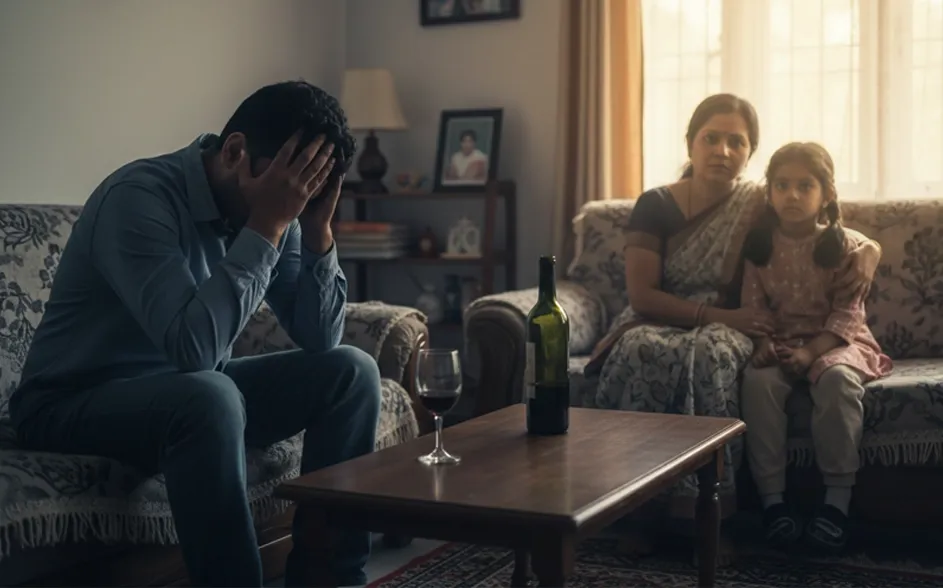
While the person using substances may feel disconnected from reality or simply focused on surviving the day, their family is: 

  • Waking up with anxiety, not knowing what version of you they’ll encounter 
  • Carrying the weight of secrets to protect the family’s reputation 
  • Managing finances that are quietly unravelling 
  • Grieving the person you used to be — while you are still alive 

And in most cases, they stay. Because they love you. Because they still believe in who you can become. 

The Emotional Cost of Addiction on Family Relationships

Emotional damage from addiction accumulates slowly, then all at once. Family members rarely speak about the depth of their pain — not because it isn’t real, but because they are too exhausted to find the words. 

Here is what living inside an addiction-affected home actually looks like across each relationship. 

How Addiction Destroys Marriages and Partnerships

Your spouse or partner fell in love with a version of you that still exists somewhere beneath the surface. They remember your laugh. The way you listened. The plans you made together. 

Now, they live with a different reality. 

Addiction changes the texture of a relationship completely. Trust — which takes years to build — gets eroded through broken promises, lies about substance use, and emotional unavailability. Many spouses silently carry questions they are afraid to ask out loud: “Is this my fault? Did I do something wrong? How much longer can I hold this together?” 

The addiction relationship pattern that emerges is painful and predictable: conflict, brief calm, hope, relapse, and conflict again. Spouses walk on eggshells, avoid certain topics, and gradually build emotional walls to protect themselves — even while staying physically present. 

Sleepless nights become routine. Emotional intimacy disappears. And yet, most partners do not leave. They stay because they love you and because they believe in your recovery — even when you have stopped believing in it yourself. 

The Pain Addiction Causes Parents — A Grief With No Name

There is a particular kind of suffering unique to parents of someone struggling with addiction. It has no clean name in psychology, but every parent in this situation recognises it immediately. 

It is the grief of watching your child suffer a slow, visible destruction — and feeling powerless to stop it. 

Parents of people with addiction disorders commonly experience guilt (“Where did we go wrong?”), shame about what family and society will think, and a persistent, consuming fear: “Will my child survive this?” 

Studies show that parents of individuals with substance use disorders report significantly higher rates of anxiety, depression, and stress-related health conditions than the general population. Many age prematurely under the accumulated weight of this experience. 

And still, they show up. They cover your mistakes with relatives. They quietly settle debts. They raid retirement savings, sell assets, and exhaust every resource — not because they are naive, but because the alternative — doing nothing — feels impossible when it is their child. 

The effects of addiction on family are arguably cruelest to parents, because parental love does not come with an off switch.

How Addiction Robs Children of Their Childhoods

Children who grow up in homes affected by addiction learn things no child should have to learn. 

They learn to scan a room the moment they walk in reading body language, assessing mood, calculating safety. They learn to stay quiet, to take up as little space as possible, to manage conflict that is not theirs to manage. 

Research published by the Substance Abuse and Mental Health Services Administration (SAMHSA) estimates that one in eight children in the U.S. grows up in a household with at least one parent who has a substance use disorder and the developmental consequences are significant and lasting. 

Children living with a parent’s addiction commonly experience: 

  • Chronic anxiety — hypervigilance becomes their baseline 
  • Emotional neglect — even in physically present families 
  • Shame and secrecy — they rarely talk about home at school 
  • Self-blame — many children believe they caused the problem or could fix it 

The long-term consequences of this childhood are well-documented: higher rates of anxiety disorders, depression, relationship difficulties in adulthood, and a significantly elevated risk of developing addiction themselves. 

Children do not choose this life. They deserve to be part of your reason to recover.

Siblings: The Most Overlooked Casualty of

Siblings of someone struggling with addiction often describe feeling invisible. 

When a family’s full emotional energy is directed toward the person in crisis, brothers and sisters fade into the background their needs unspoken, their struggles unseen. Many siblings report feeling simultaneously guilty for feeling resentful and angry for feeling guilty. 

Some distance themselves permanently. Some leave home earlier than planned. Some carry deep emotional wounds into their own adult relationships. 

The family impact of addiction extends in every direction. It does not spare the quiet ones. 

The Financial Impact of Addiction on Families: The Hidden Drain

The financial burden of addiction on a family is rarely discussed openly, but the numbers are staggering. 

Addiction-related costs that families absorb include: 

  • The substance itself costs that escalate dramatically as tolerance builds 
  • Legal fees from addiction-related incidents 
  • Medical emergencies and hospitalisation 
  • Lost household income when the addicted person cannot maintain employment 
  • Covering debts, damaged property, or consequences of impaired decisions 
  • The eventual cost of treatment – rehabilitation, therapy, detox 

Most families do not have funds readily available for residential rehabilitation. They break fixed deposits, borrow from relatives, liquidate jewellery, or take personal loans. They do this not from financial recklessness, but from a deeply human impulse: “If this saves their life, it is worth everything we have.” 

The financial impact of drug addiction on a family is not only the money spent. It is the financial future that quietly disappears; retirement plans disrupted, children’s education funds redirected, housing security undermined. 

Why Families Stay Silent and Why That Silence Makes It Worse

Despite living through all of this, most families do not speak openly about what is happening. 

Social stigma around addiction is powerful. Families fear judgment from their community, embarrassment for their loved one, and damage to their own reputation. They protect the secret. They present a functional face to the outside world while privately falling apart. 

This silence, however understandable, has a direct cost: it delays intervention. The longer addiction remains unacknowledged, the more damage accumulates — emotionally, relationally, and financially.

A Message For Anyone Struggling With Addiction

If you are currently living with addiction, take a moment with these questions — not to feel guilt, but to feel responsibility. 

When did your family last laugh without tension in the room? When did your partner last feel genuinely safe with you? When did your parents sleep through the night without worry? When did your children last just be children? 

Your addiction does not feel like a choice in the moment. We understand that. Addiction is a chronic, treatable health condition — not a moral failure, not a weakness of character. 

But responsibility does not require you to have been in control. It only requires you to choose help now, while there is still so much worth saving. 

Addiction Is Treatable and Recovery Heals Families, Not Just Individuals

One of the most important things families need to hear: recovery is possible, and it heals more than the individual. 

With proper, evidence-based treatment: 

  • Trust begins to rebuild — slowly, but genuinely 
  • Relationships find new ground to stand on 
  • Financial stability becomes possible again 
  • Children get their parent back 
  • Spouses remember who they married 

Untreated addiction, on the other hand, only deepens every form of damage. The cost of waiting is always higher than the cost of beginning. 

How Veda Rehab Centre Mumbai Helps Families Heal

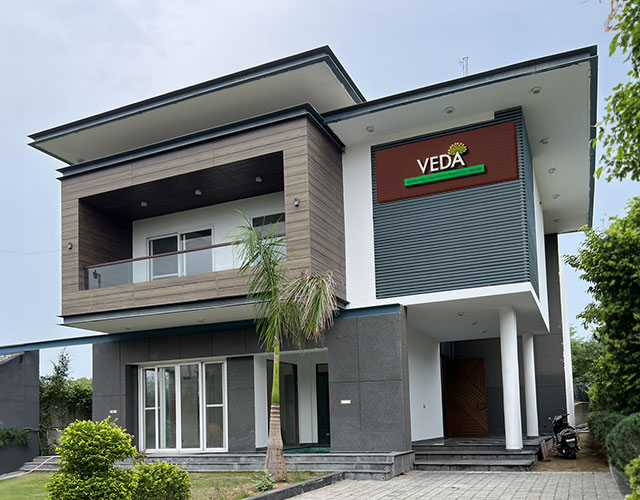
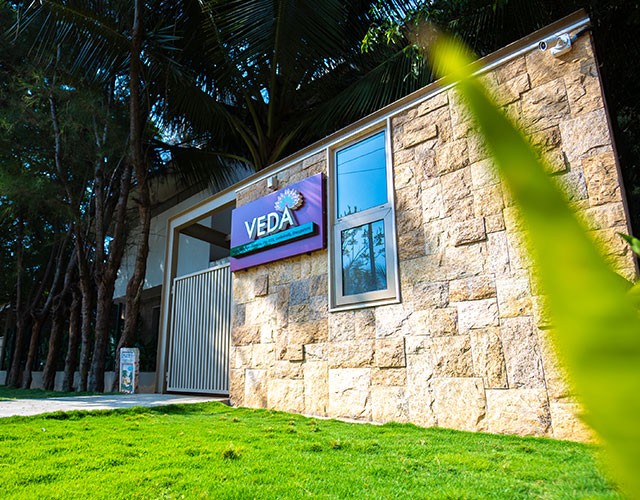
At Veda Rehabilitation Centre in Mumbai, treatment is built on a foundational understanding: addiction affects the entire family system, and genuine recovery must address the entire family system. 

Veda’s integrated programme includes: 

  • Medical detoxification (where clinically required) under professional supervision 
  • Family therapy — involving loved ones directly in the healing process 
  • Mental health co-occurring disorder support 
  • Relapse prevention planning tailored to each individual 
  • Aftercare support to sustain recovery beyond residential treatment 

Families are not kept at a distance at Veda, they are part of the solution. Because addiction recovery that does not include the family system is incomplete. 


Residential Treatment Costs at Veda Rehab Centre Mumbai 

Veda is committed to transparent, honest pricing so families can plan with clarity rather than uncertainty. 

Accommodation TypeMonthly Cost (All Inclusive)
Shared Accommodation₹2,85,000 per month
Private Accommodation₹4,85,000 per month

All costs include therapy sessions, medical care, individual and group counselling, and holistic treatment modalities. Final pricing is confirmed based on individual clinical needs during the intake assessment. 

Many families stretch every available resource to fund treatment — not because it is easy, but because they have made the calculation: the cost of recovery is far less than the cost of addiction. 

What Your Family Hopes For (Even When They Cannot Say It) 

Families affected by addiction are not hoping for a flawless version of you. They are not expecting perfection or an overnight transformation. 

They are hoping to see you again — the real you, beneath the addiction. 

They hope for honesty, even when it is uncomfortable. They hope for effort, even when progress is slow. They hope for your presence — genuinely present, not just physically there. 

They want you back. That hope, in most cases, is still intact. 

FAQs Related to Effects of Addiction on Family

What are the most common emotional effects of addiction on family members?

Family members of someone with a substance use disorder commonly experience chronic anxiety, depression, emotional exhaustion, and feelings of helplessness. Spouses often report emotional loneliness and eroded trust. Parents may carry intense guilt and fear. Children frequently develop anxiety, self-blame, and difficulties with emotional regulation. Siblings often feel overlooked and resentful.

Addiction fundamentally changes relational dynamics. It typically introduces dishonesty, emotional unavailability, broken commitments, and escalating conflict. Partners often feel a deep sense of loss — grieving the person they loved — while simultaneously trying to manage the daily chaos that addiction creates. Without treatment and family counselling, marriages affected by addiction face significant breakdown risk. 

Yes — the research is clear. Children who grow up in households with parental substance use disorders are at significantly higher risk of developing anxiety, depression, trust difficulties, and addiction themselves in adulthood. However, recovery and family therapy meaningfully reduce these risks, particularly when intervention happens early. 

Absolutely. Family recovery is a real, achievable outcome. With professional family therapy, honest communication, and sustained sobriety, relationships can heal substantially. Trust is rebuilt gradually and genuinely. Many families describe their relationships as stronger after recovery than before addiction began. 

The financial impact is extensive. Beyond the cost of substances, families typically absorb legal expenses, medical bills, lost income, and eventually treatment costs. Residential rehabilitation in India ranges from ₹2–5 lakhs per month depending on facility and programme type. However, most families who have been through it report that the financial cost of treatment is far lower than the ongoing financial and emotional cost of untreated addiction. 

Veda includes c as a core component of every treatment programme. Family members are educated about addiction as a health condition, supported in processing their own emotional experiences, and equipped with communication tools for healthy, sustainable recovery at home. Families are not spectators in the process — they are active participants in healing. 

The first step is a confidential conversation. Families or individuals can contact Veda’s team for an initial consultation, which will include an assessment of needs and a clear explanation of treatment options and costs. There is no commitment required to enquire. 

Leave A Comment

Your email address will not be published. Required fields are marked *